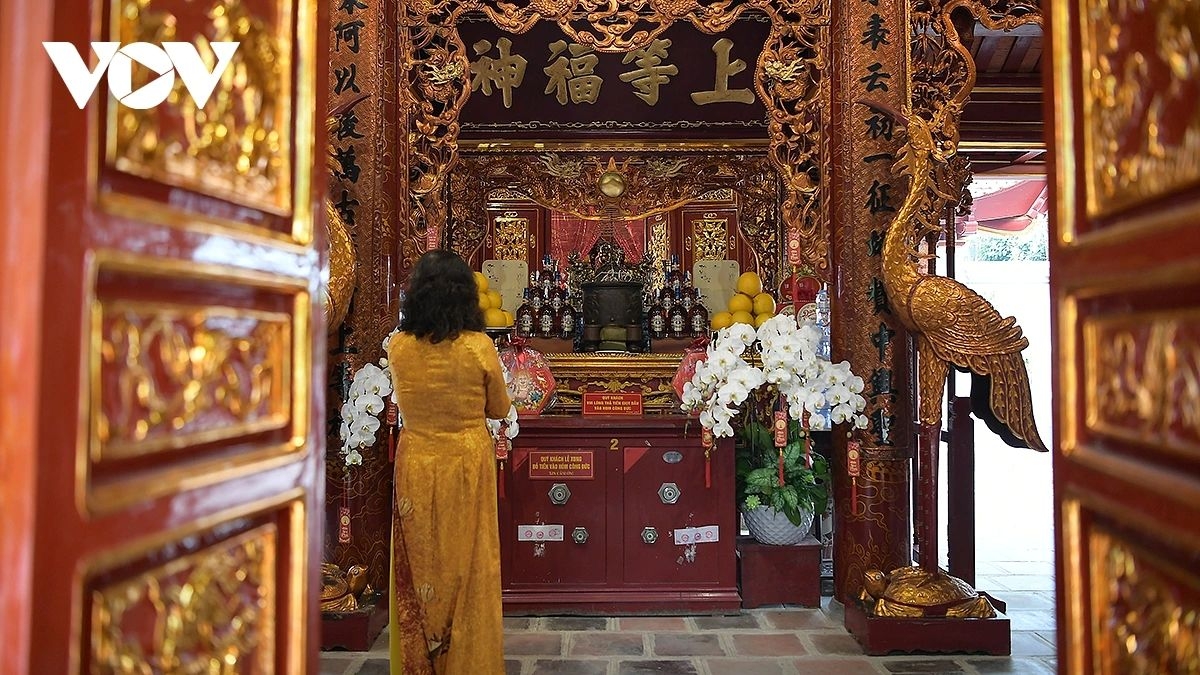
VOV.VN - Every spring, as the Lunar New Year (Tet) arrives, the people of Hanoi begin their year with a meaningful spiritual journey: visiting Four Sacred Temples of the former Thang Long Imperial Citadel to pray for peace and good fortune.
The “Thăng Long Tứ Trấn” refers to four temples built during the Ly Dynasty to spiritually protect the ancient capital of Thang Long (former name of Hanoi) according to Eastern geomantic principles (feng shui).
The four temples are Bach Ma, Voi Phuc, Kim Lien, and Quan Thanh, with each temple representing one direction: East – West – South – North.
These four ancient temples are to guard the four cardinal directions of the old imperial capital.
At the beginning of the year, visiting all four temples symbolises a wish for balance, protection, peace, and prosperity throughout the year.
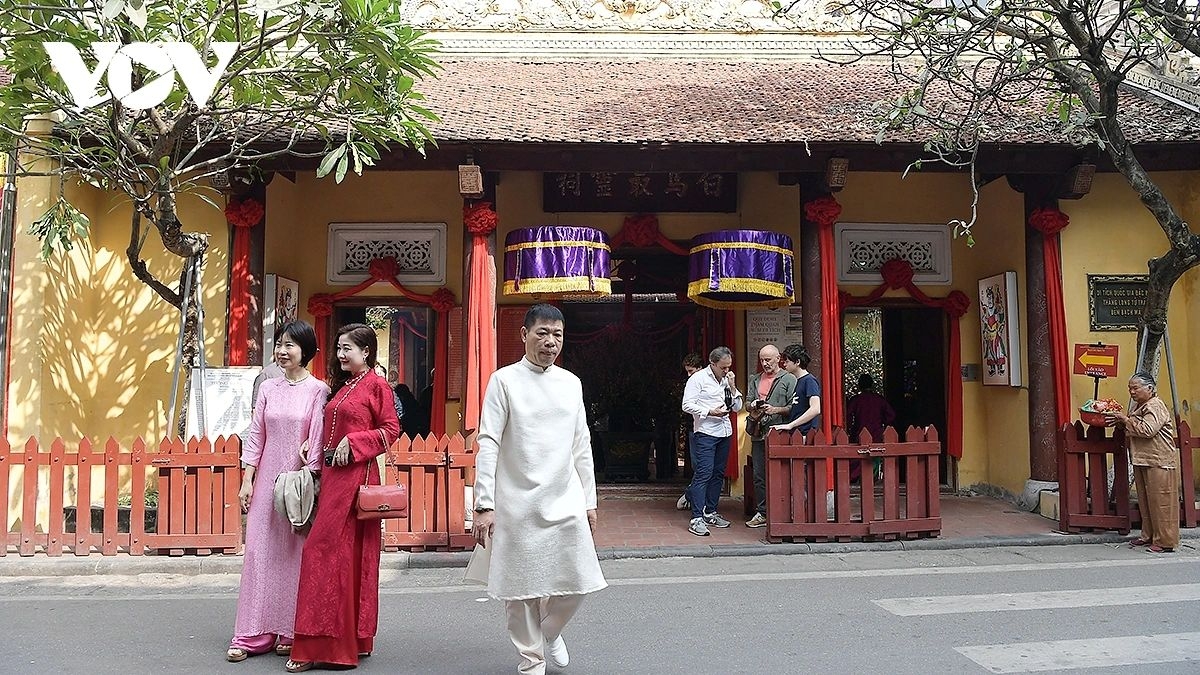
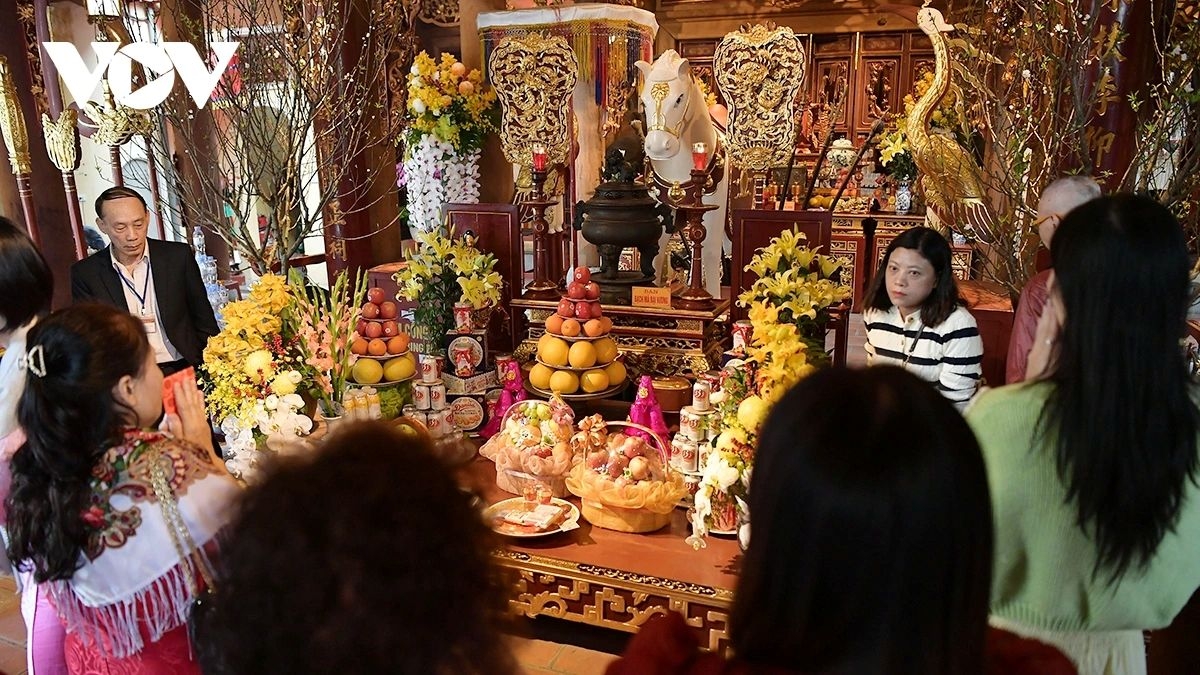
Located in the Old Quarter, Bach Ma Temple is dedicated to the deity Long Do, regarded as the guardian spirit of ancient Thang Long. According to legend, the deity helped Emperor Ly Cong Uan determine the sacred boundaries for building the capital. Visitors come here in early spring to pray for protection and stability.
Situated in the Thu Le area, Voi Phuc Temple honours Prince Linh Lang, a national hero who defended the country. Two kneeling stone elephants at the entrance give the temple its name (“Temple of the Kneeling Elephants”). Prayers here often focus on strength, courage, and safeguarding one’s family.
Kim Lien Temple worships Cao Son Dai Vuong, a mountain deity believed to protect the southern direction. With its traditional Vietnamese architecture and peaceful atmosphere, it is a place where families pray for harmony and a stable life.
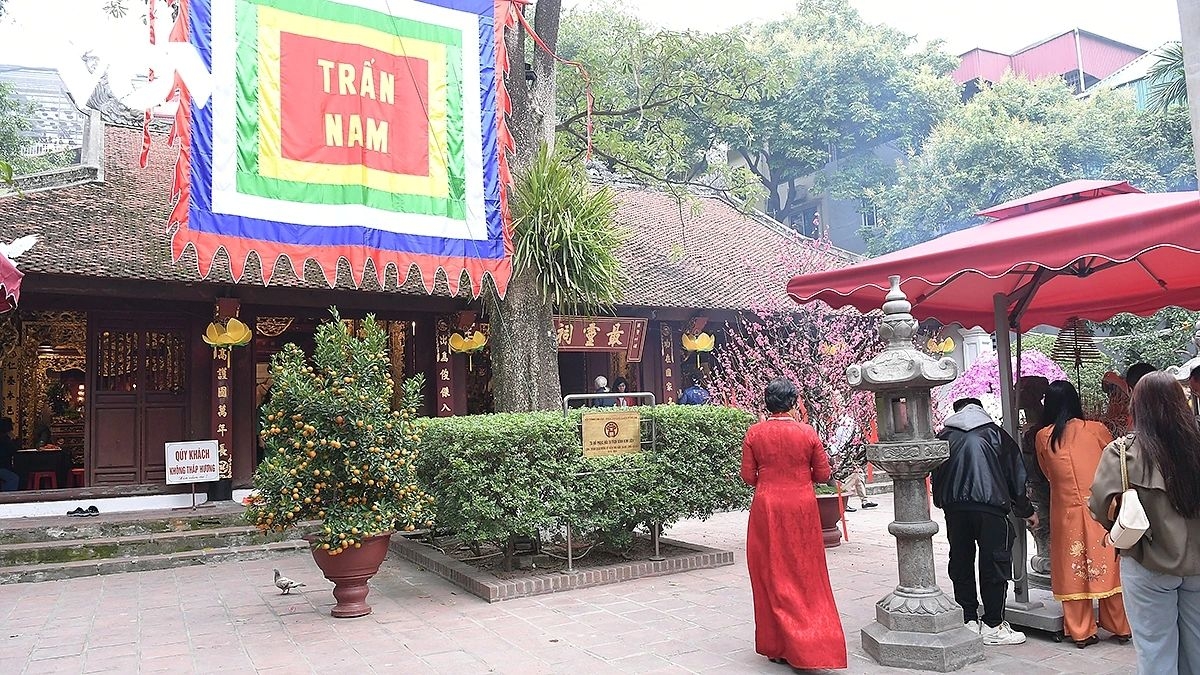
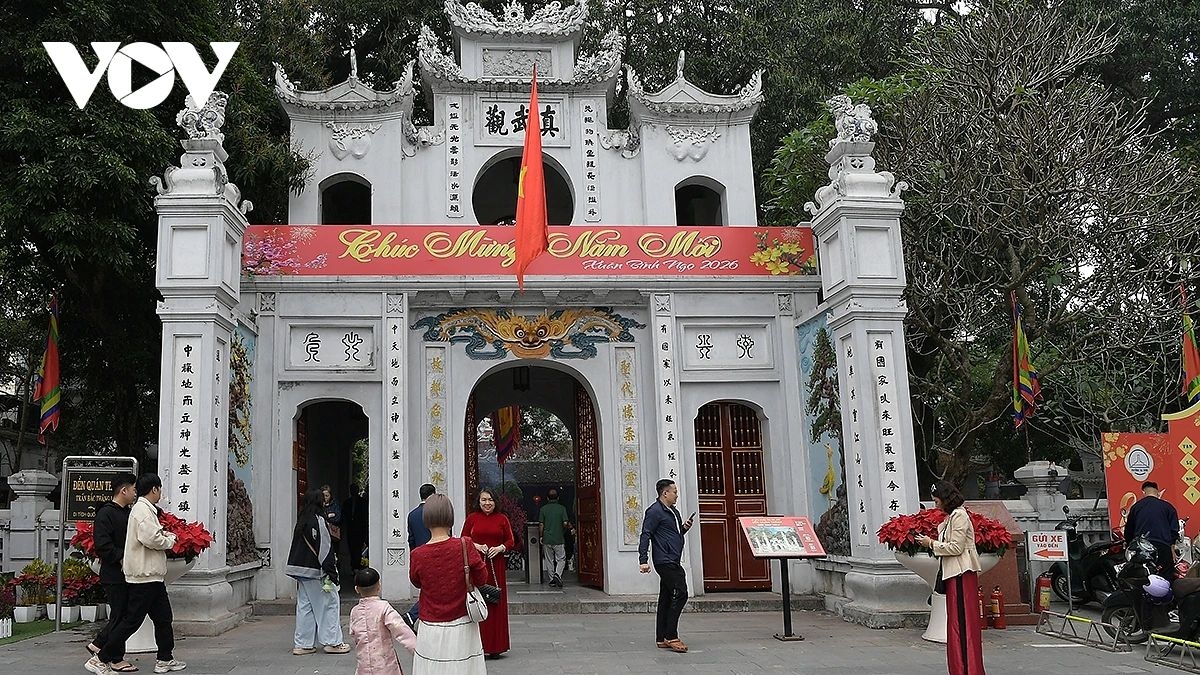
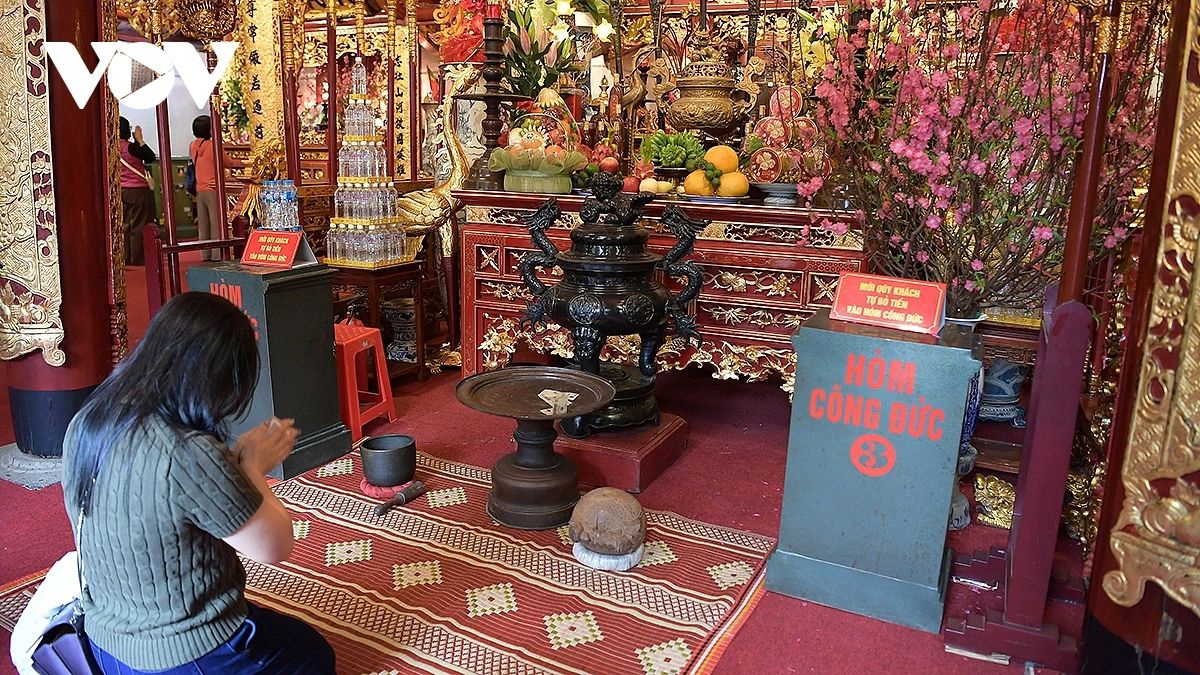
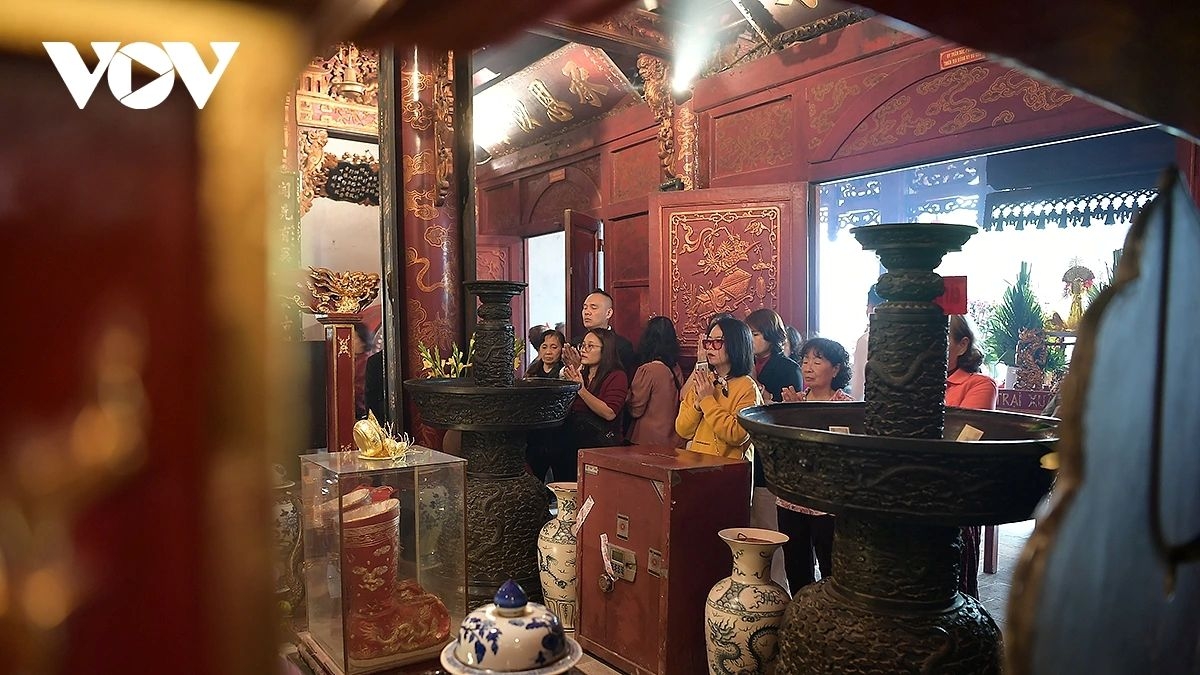
Located near West Lake, Quan Thanh Temple is dedicated to Huyen Thien Tran Vu, a powerful Taoist deity who protects the North. Inside stands an impressive large bronze statue cast in the 17th century. Many people visit in early spring to pray for health and to ward off misfortune.
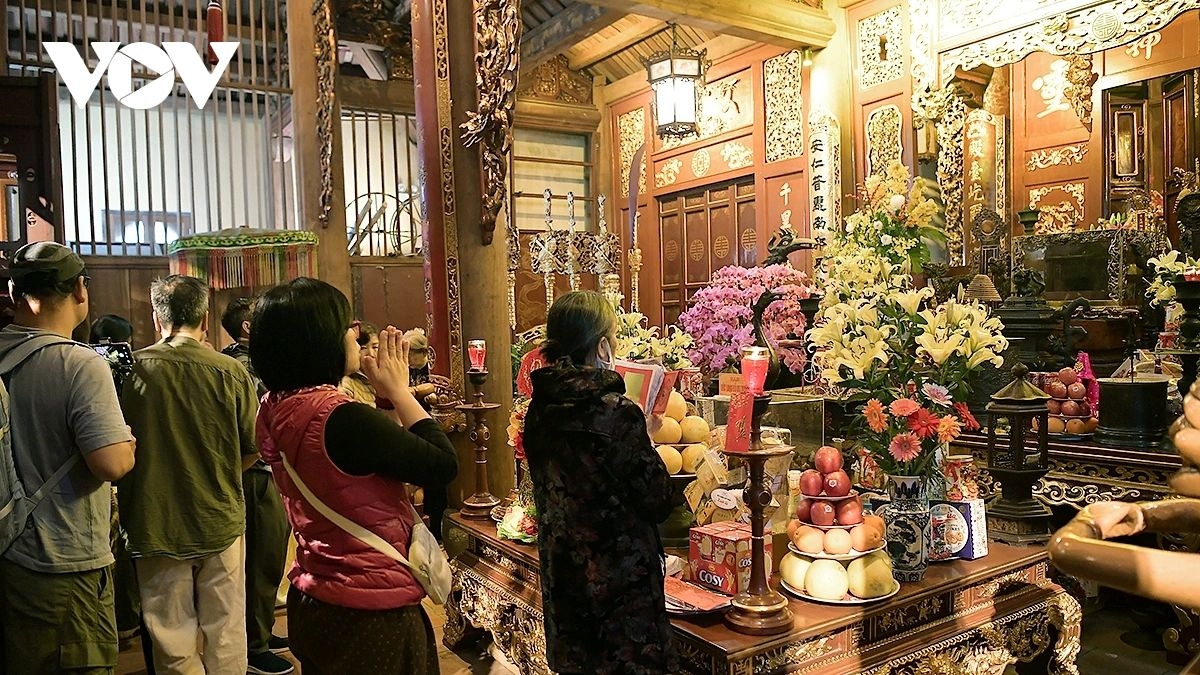
Visiting the Four Sacred Temples at the start of the year is more than a ritual for good luck.
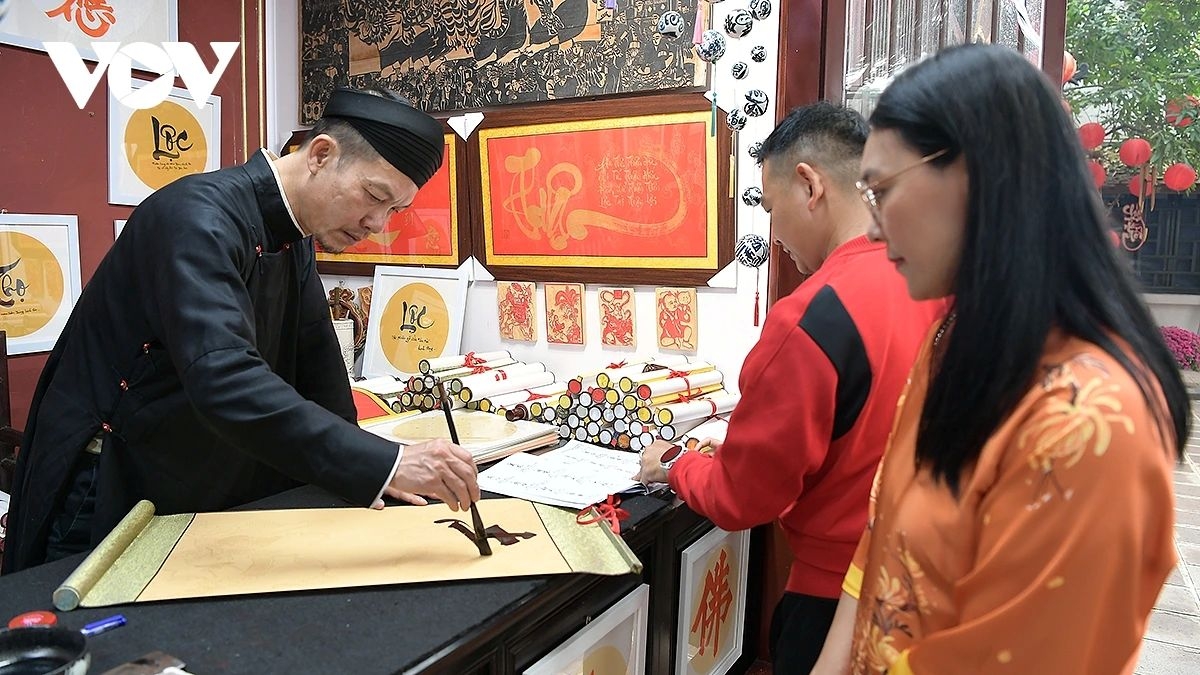
Asking for calligraphy at the start of the Lunar New Year is a cherished tradition of people in the old imperial capital, symbolising aspirations for knowledge, good fortune and blessings in the year ahead.
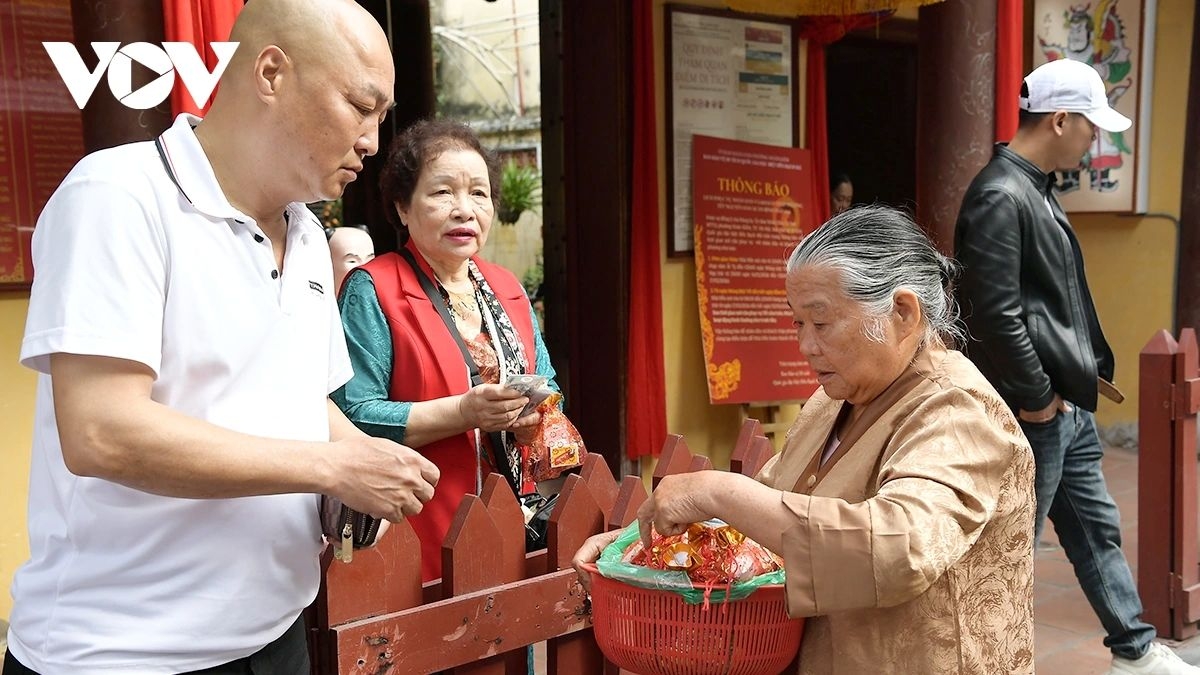
Buying salt at the beginning of the year is a traditional custom believed to bring good luck, prosperity and fulfillment in the months ahead.
Traditionally, Hanoians believe that paying respects in all four directions ensures a harmonious and well-rounded year.
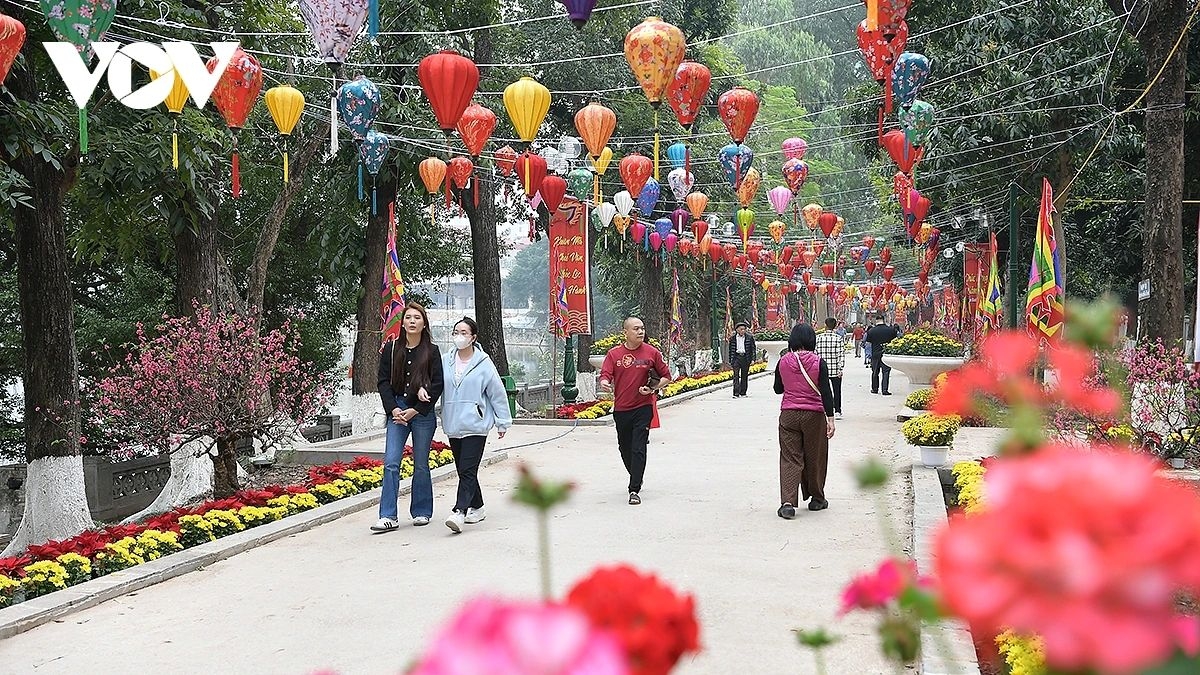
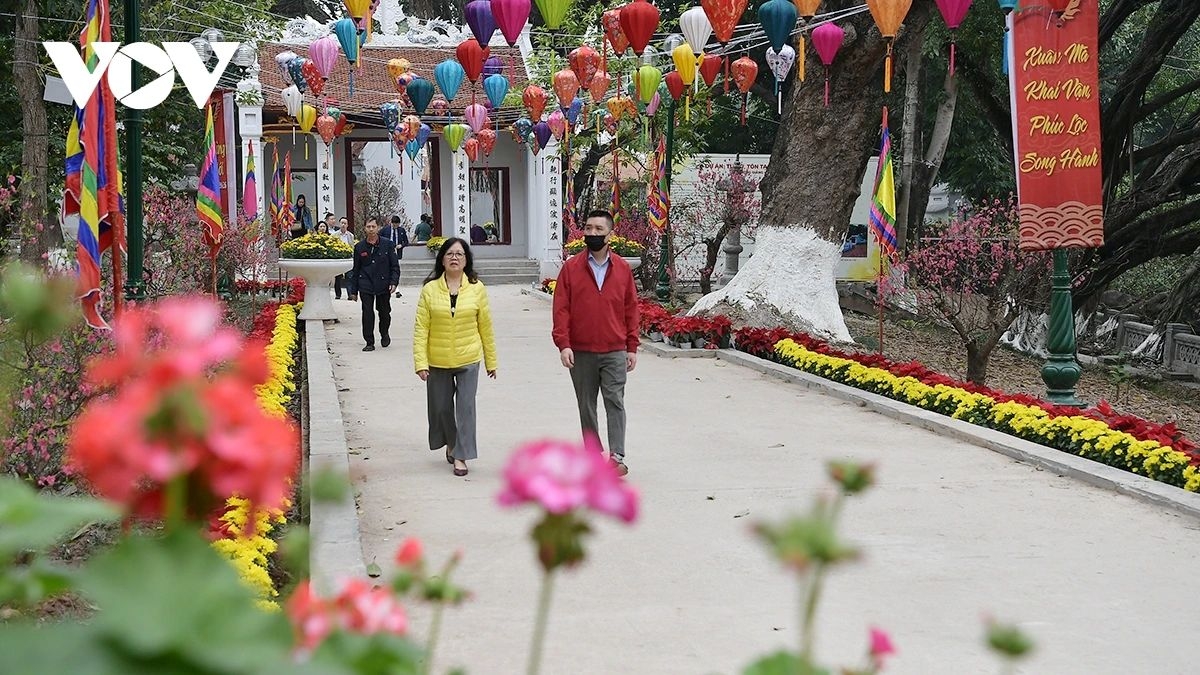
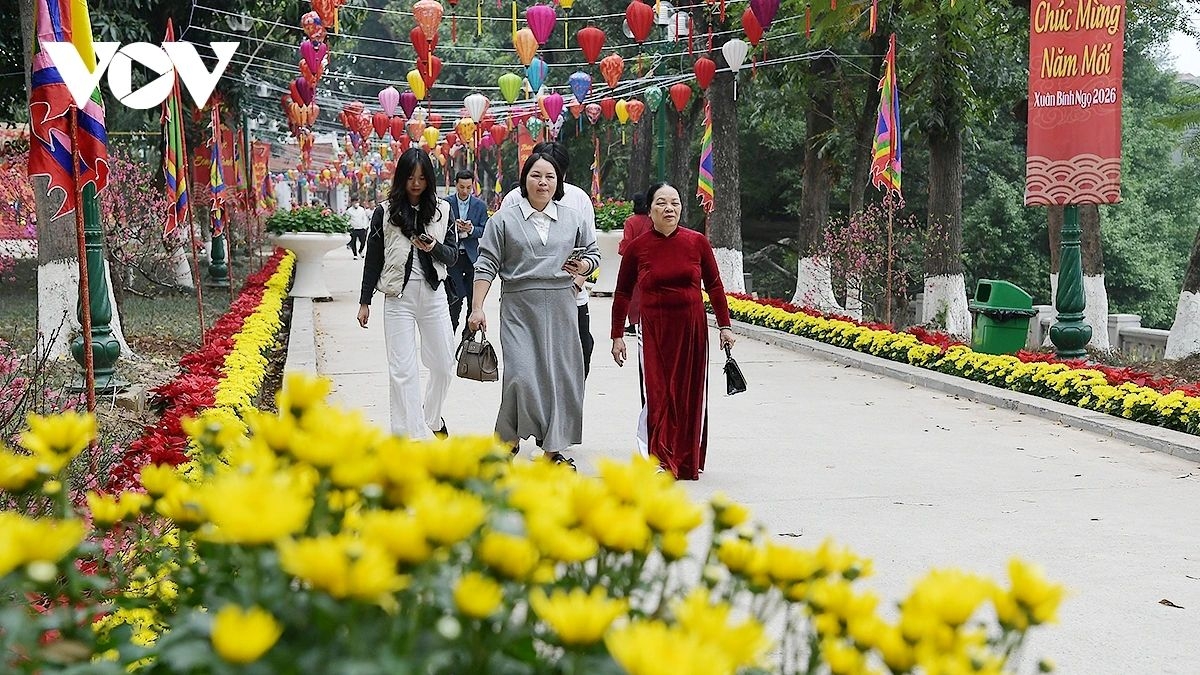
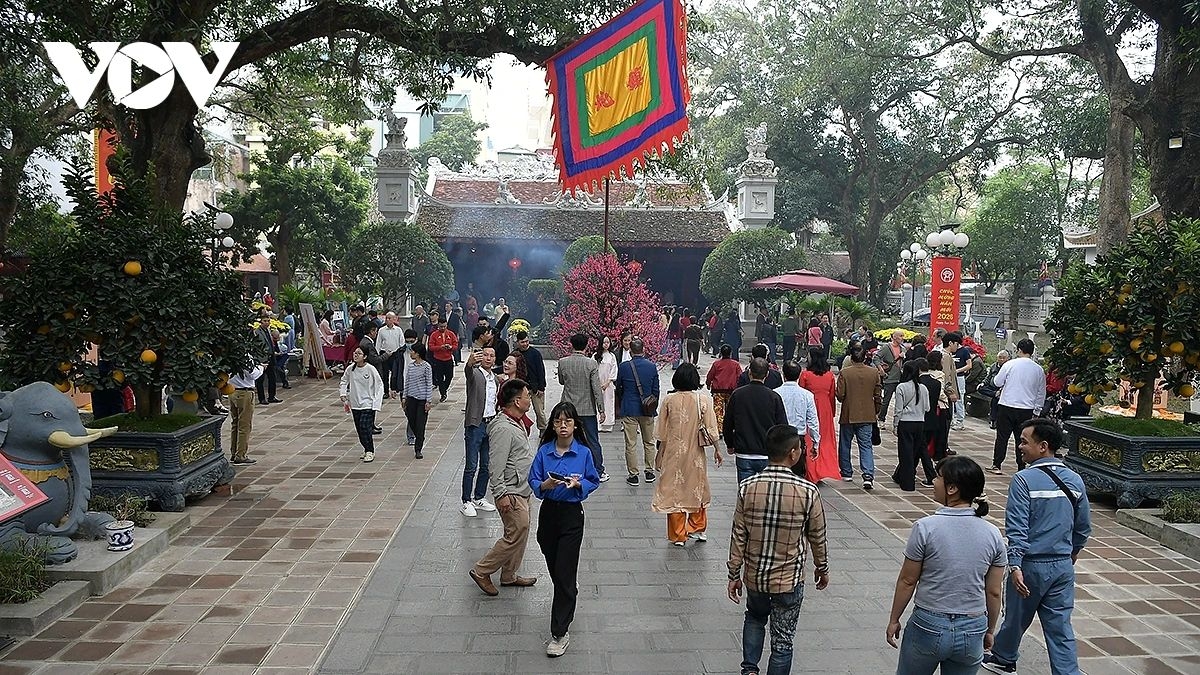
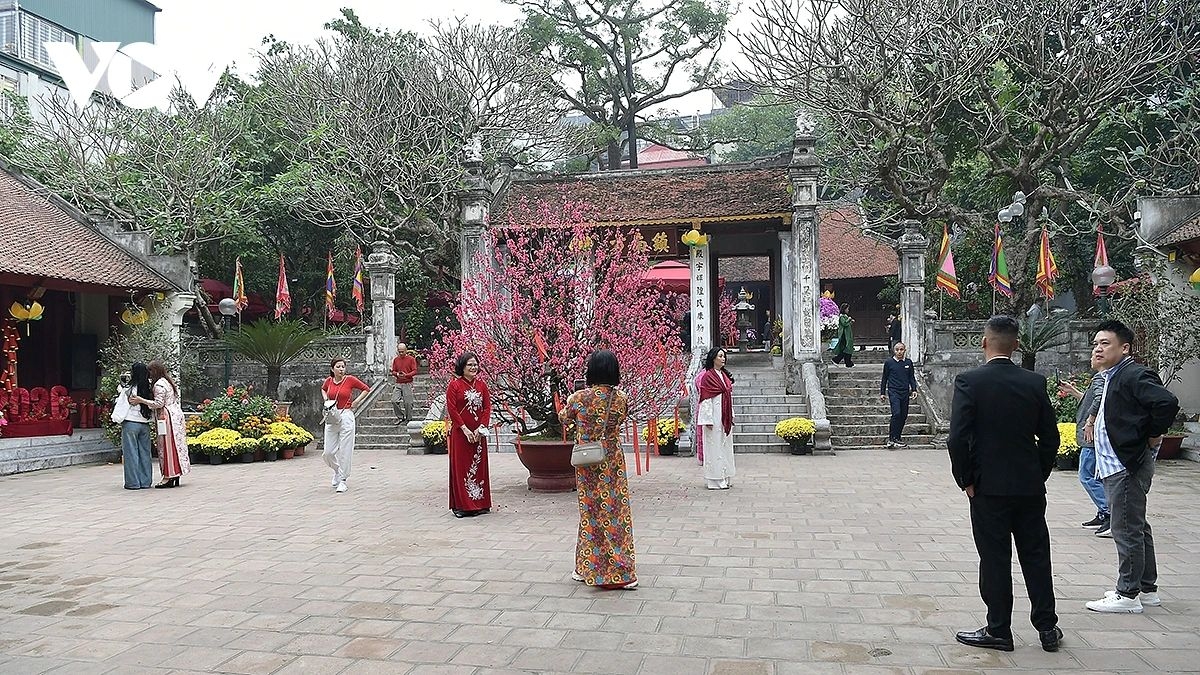
For the Year of the Horse 2026, the Four Sacred Temples have been carefully cleaned and renovated, ready to welcome residents and visitors for early spring worship.
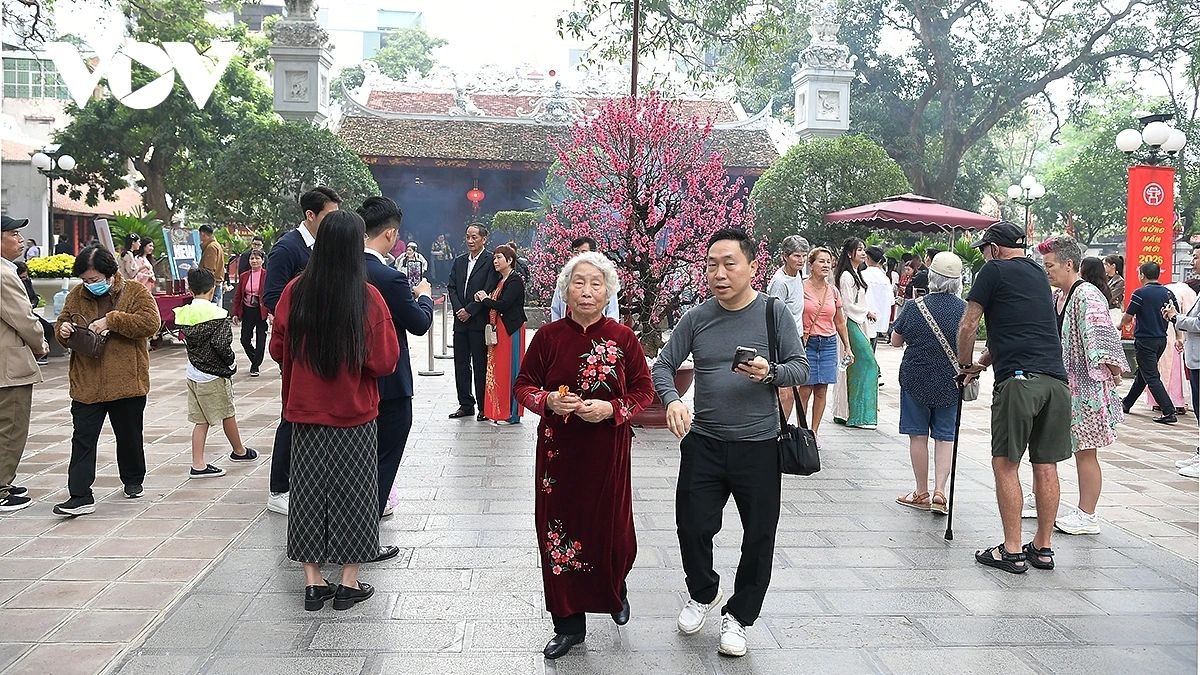
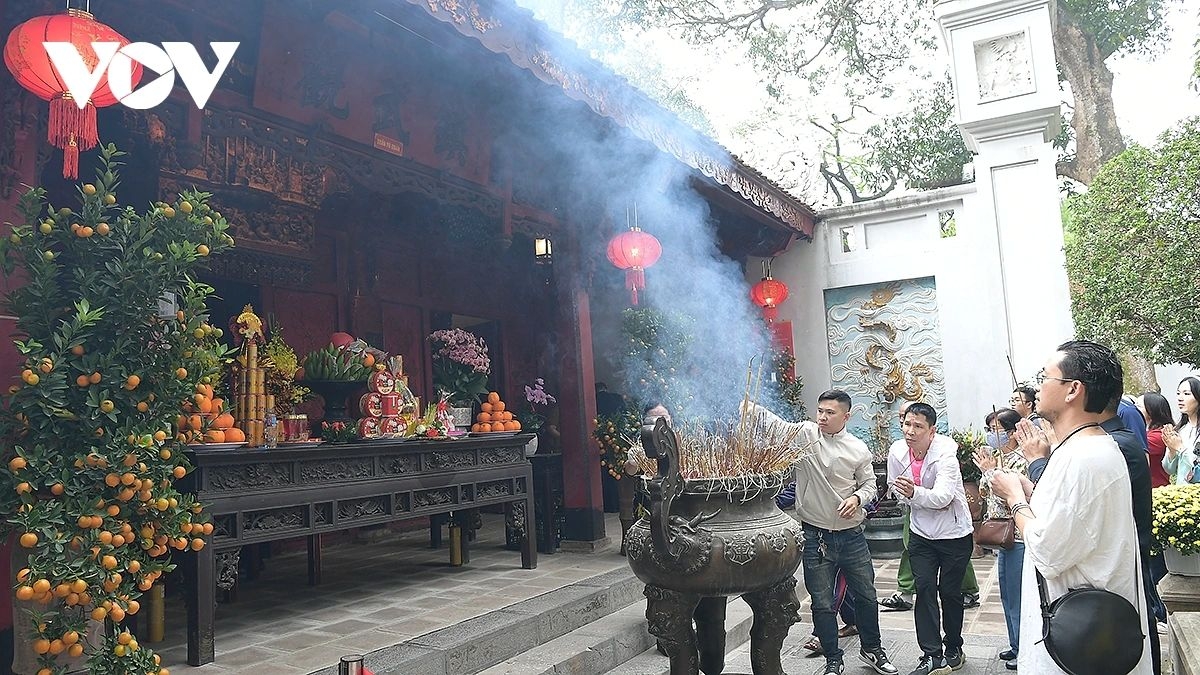
The grounds of Quan Thanh Temple are crowded with local worshippers, blending with international visitors exploring the historic site.
In addition to arranging dedicated spaces for photo-taking and New Year calligraphy, Kim Lien Temple also provides free parking for residents and visitors.
Paying reverence to the guardian deities of Thang Long and praying for health and peace in the new year is a long-standing cultural tradition of Hanoi residents.
The early-spring pilgrimage to the Four Sacred Temples of Thang Long is not simply about seeking blessings. It is a reflection of Hanoi’s enduring cultural identity where spirituality, history, and community come together at the threshold of a new year.



Bình luận
Bình luận của bạn sẽ được xét duyệt trước khi đăng
Đang tải bình luận...