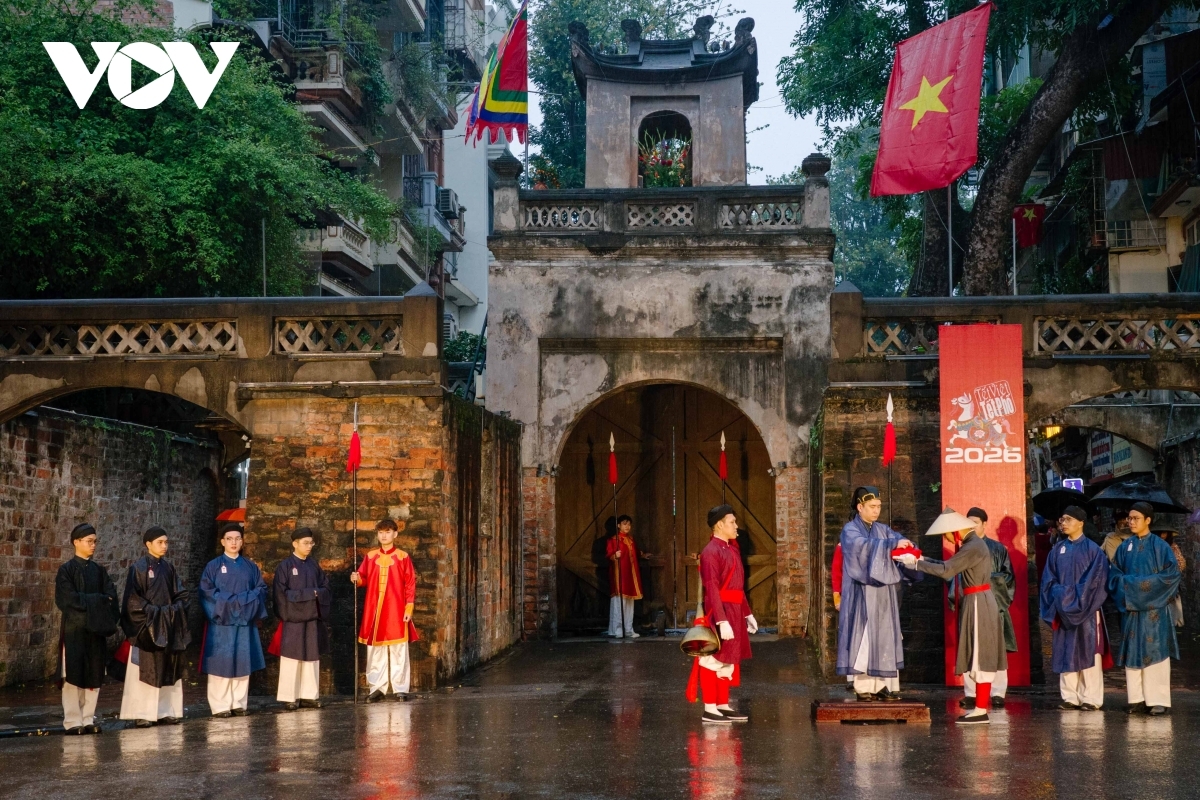
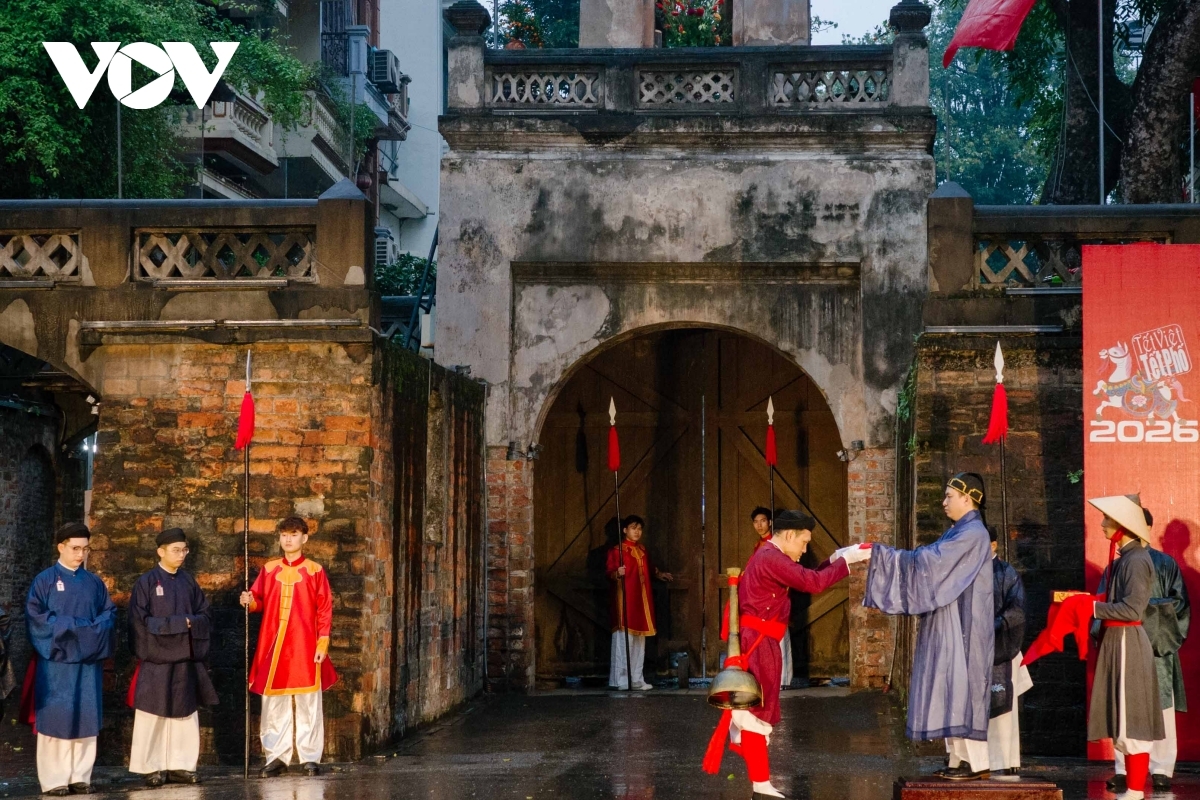
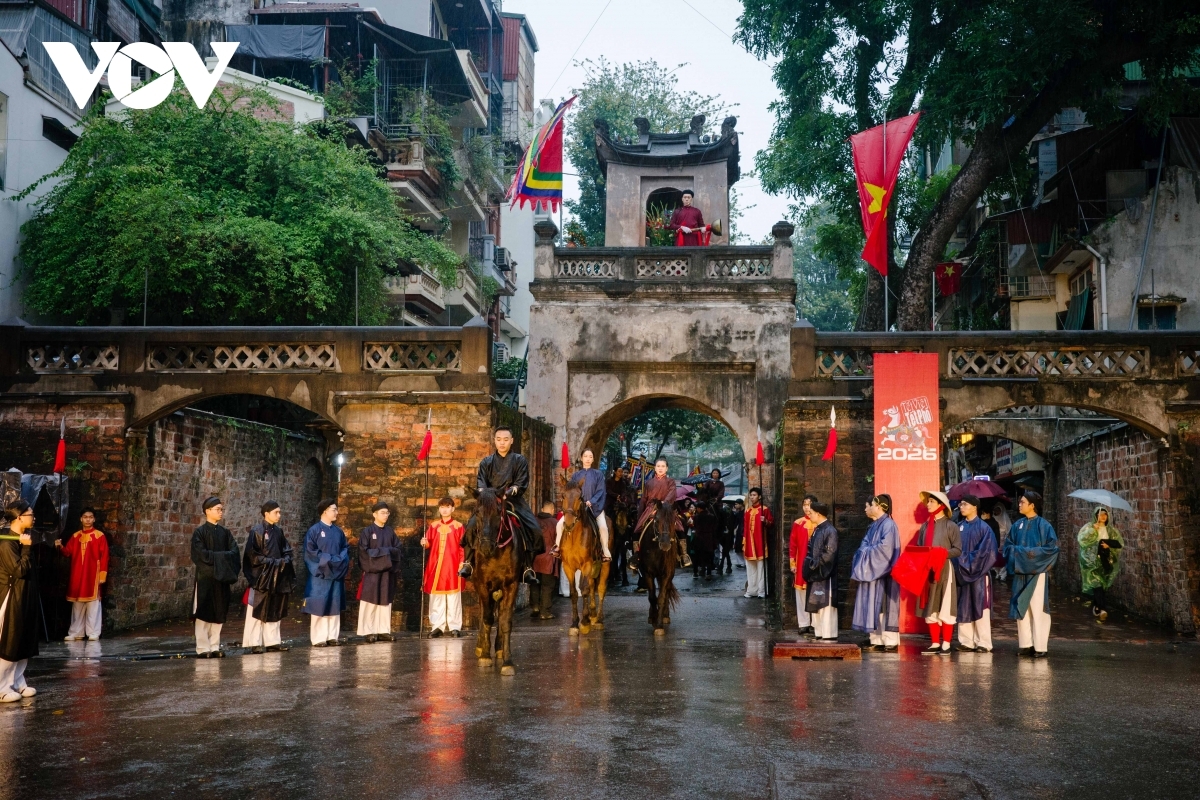
VOV.VN - The capital city of Hanoi held the Gate-Opening Ceremony at O Quan Chuong Gate — the last largely intact city gate of ancient Thang Long – on February 8 as part of the “Vietnamese Tet – Tet in the Old Quarter” programme to welcome the Lunar New Year of the Horse 2026.
From early morning, under a light spring drizzle, crowds of residents and visitors gather at O Quan Chuong Gate to witness the gate-opening ritual. The historic site is ceremonially decorated in festive spring colours. The ritual marked the opening of the “Vietnamese Tet – Tet in the Old Quarter” programme, recreating traditional spring-welcoming customs of old Hanoi.
The ritual unfolds to the resonant sounds of drums and gongs, creating a solemn moment in the heart of the Old Quarter. The opening of O Quan Chuong Gate, one of the few remaining vestiges of ancient Thang Long, carries strong symbolic meaning, welcoming the new spring while evoking the historical and cultural legacy of the former imperial capital.
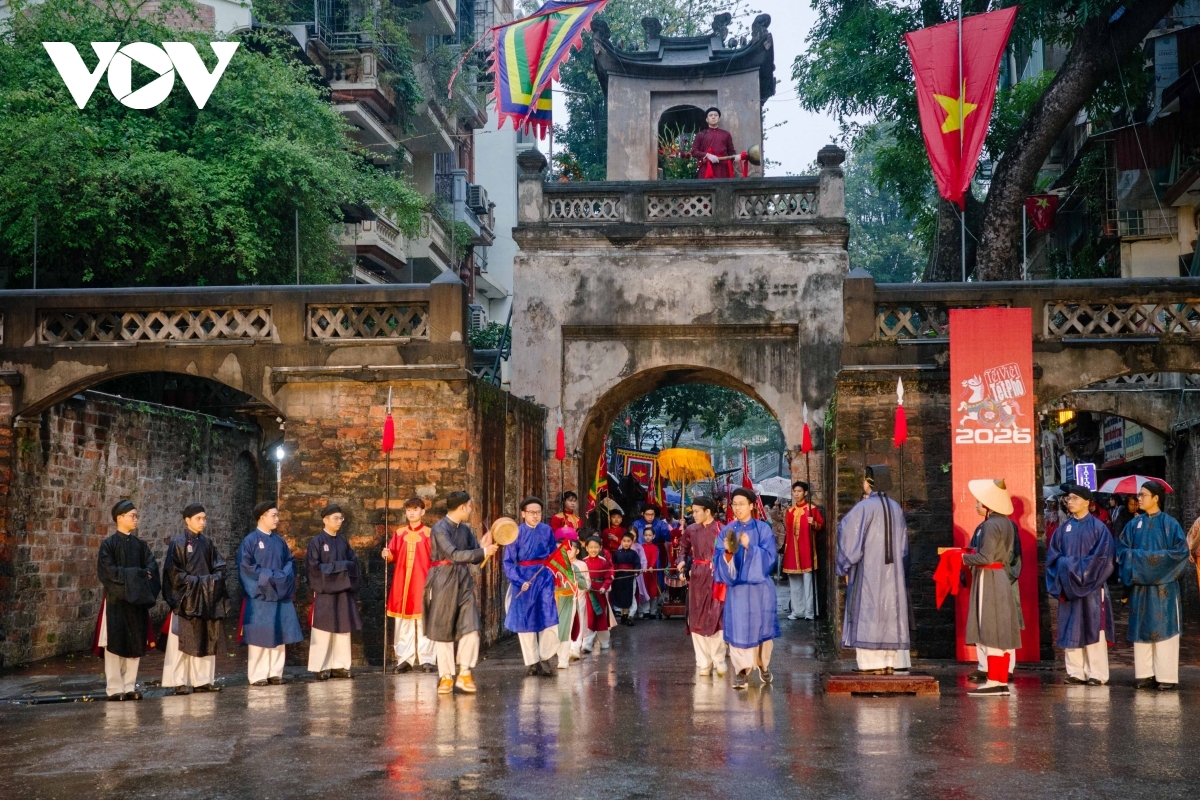
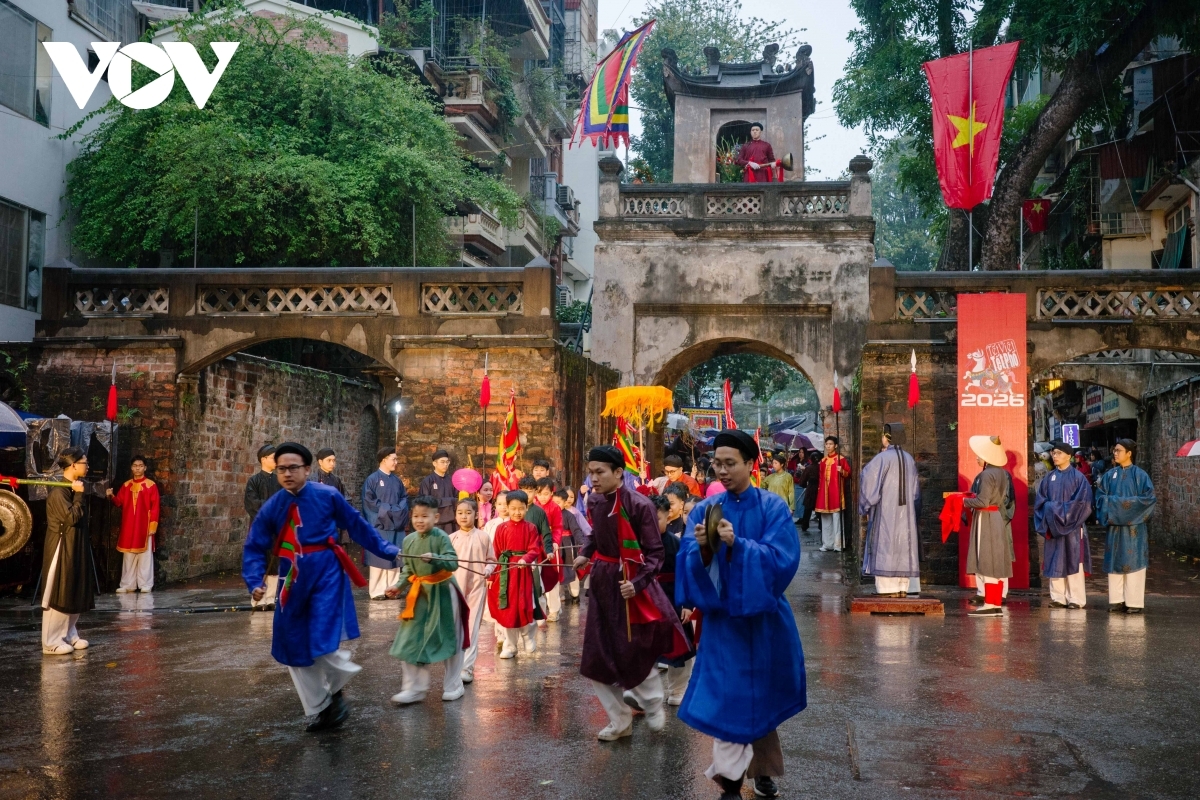
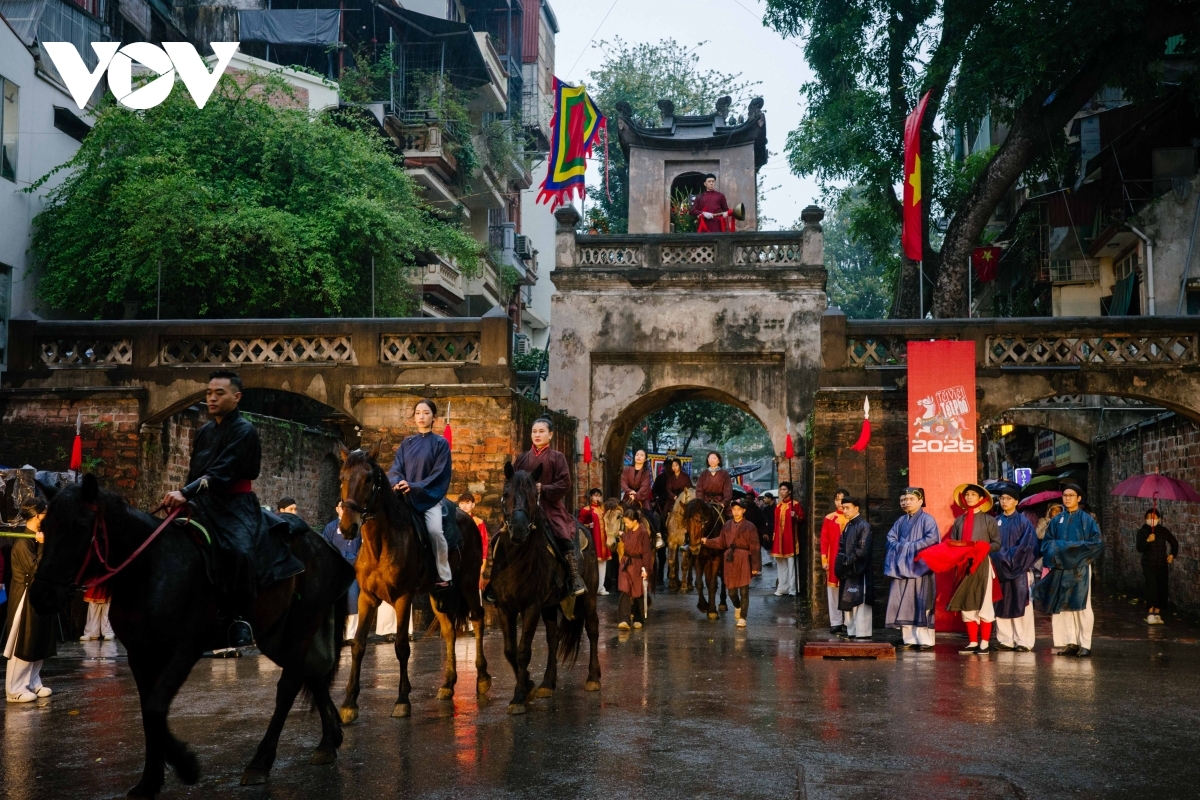
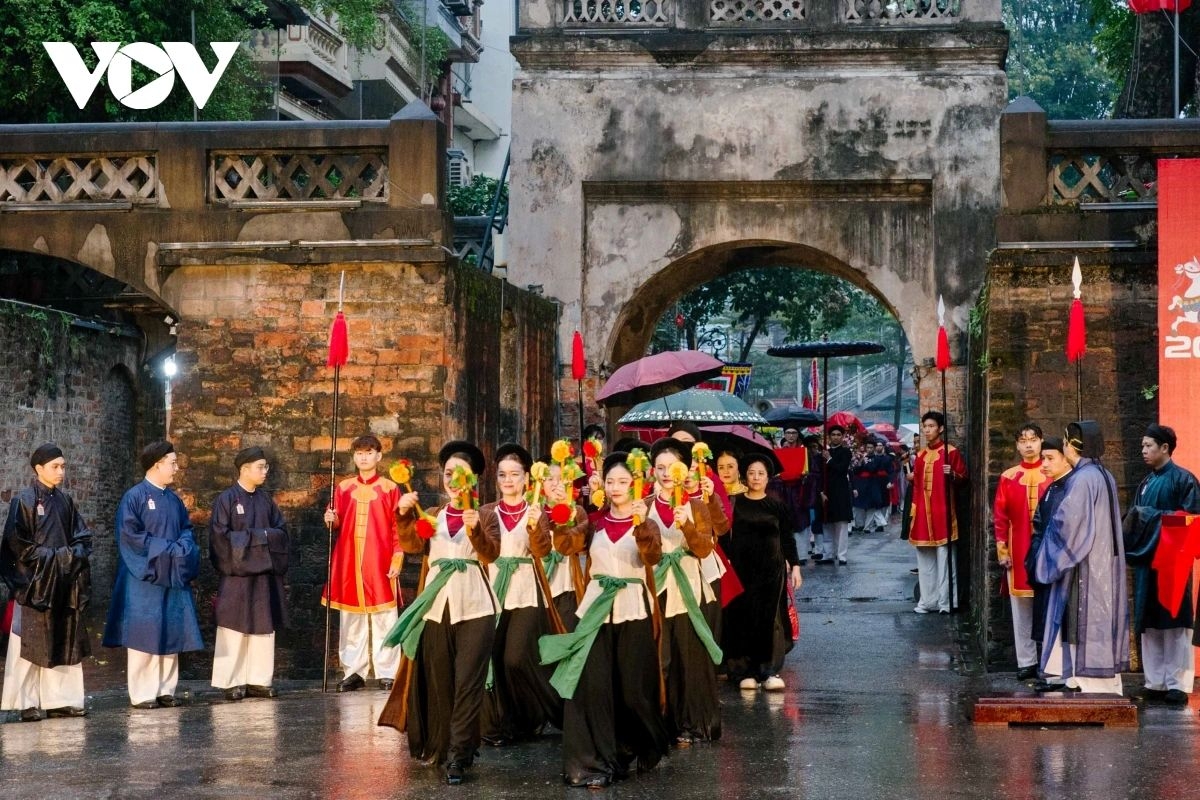
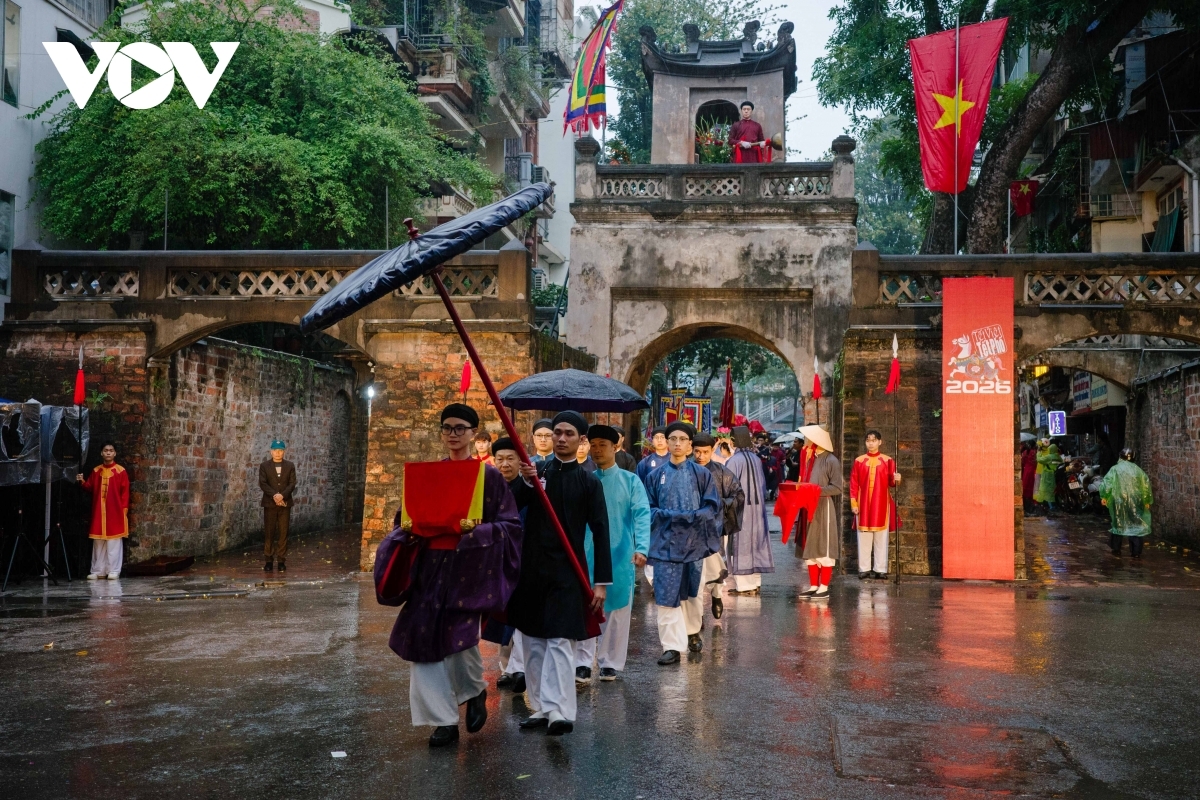
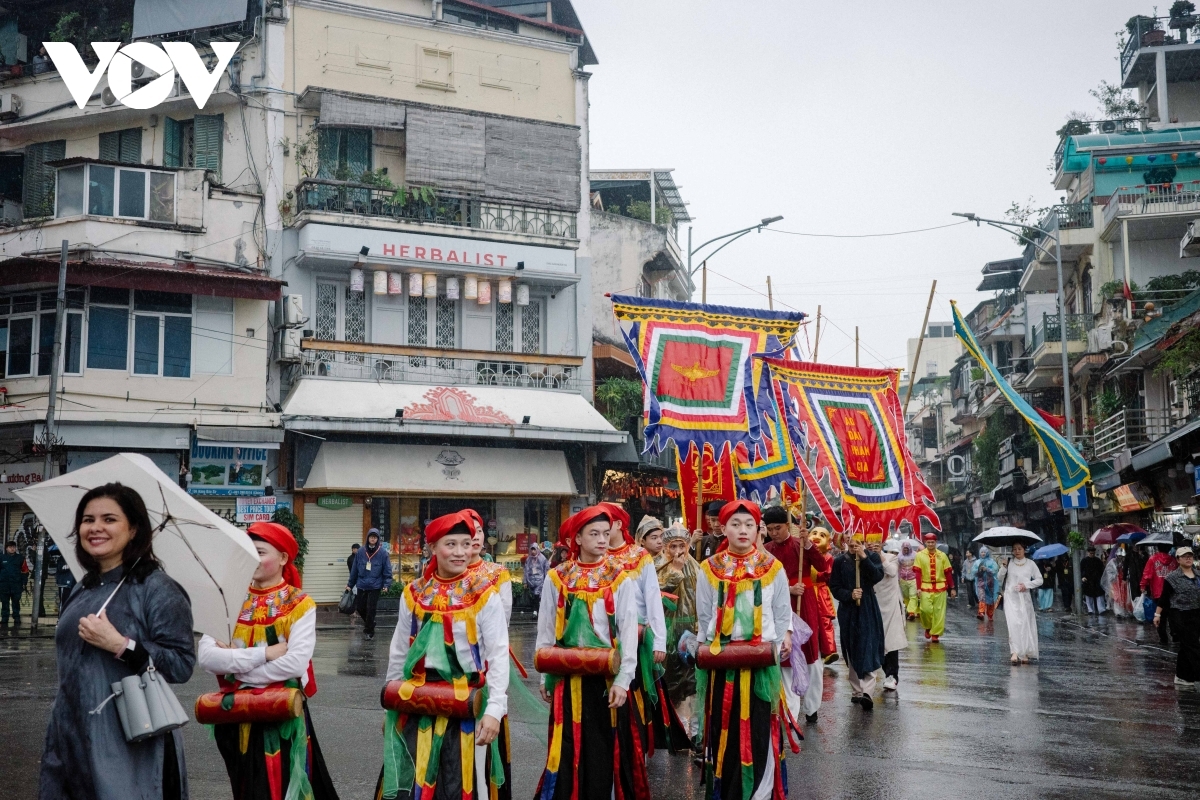
The traditional procession moves solemnly through O Quan Chuong Gate, recreating the image of ceremonial escorts entering the ancient capital of Thang Long. Amid vibrant banners and the echoing sound of festival drums, participants dressed in traditional costumes proceed slowly through the historic gate, drawing large crowds of residents and visitors.
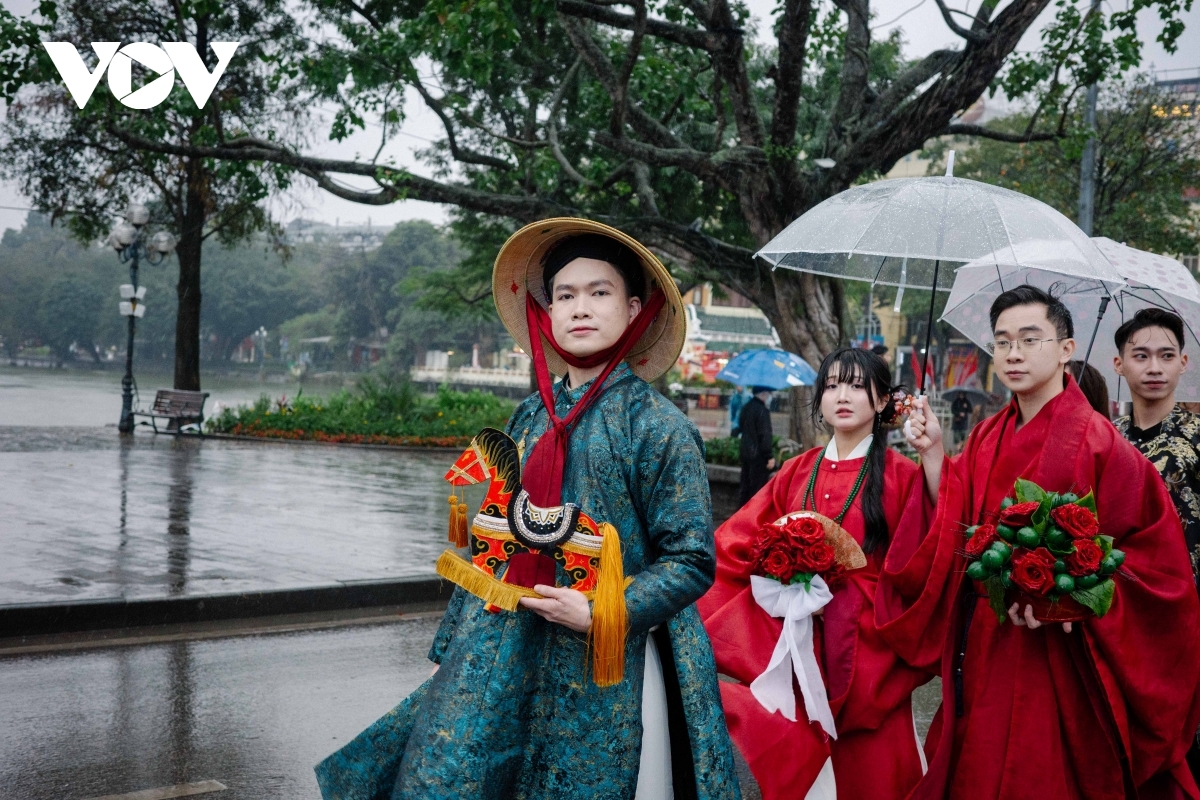
A group of children in traditional costumes lead wooden Thong Dong horses - a popular toy among Hanoi’s children in the early 20th century. The image evokes simple childhood memories while symbolising the intergenerational transmission of cultural traditions, adding a warm and joyful atmosphere to the festival.
The spring-announcing procession, featuring 15 horses, stands out as a highlight of the event. As the horses move majestically through the Old Quarter, the scene evoks memories of Dai Viet cavalry in history, symbolising strength, valor and the martial spirit embedded in Vietnamese tradition.
Performers in traditional attire demonstrate horse-handling techniques, drawing the attention of residents and visitors. The display not only evoked the spirit of traditional martial arts, but also help revive elements of Vietnam’s historical military culture.
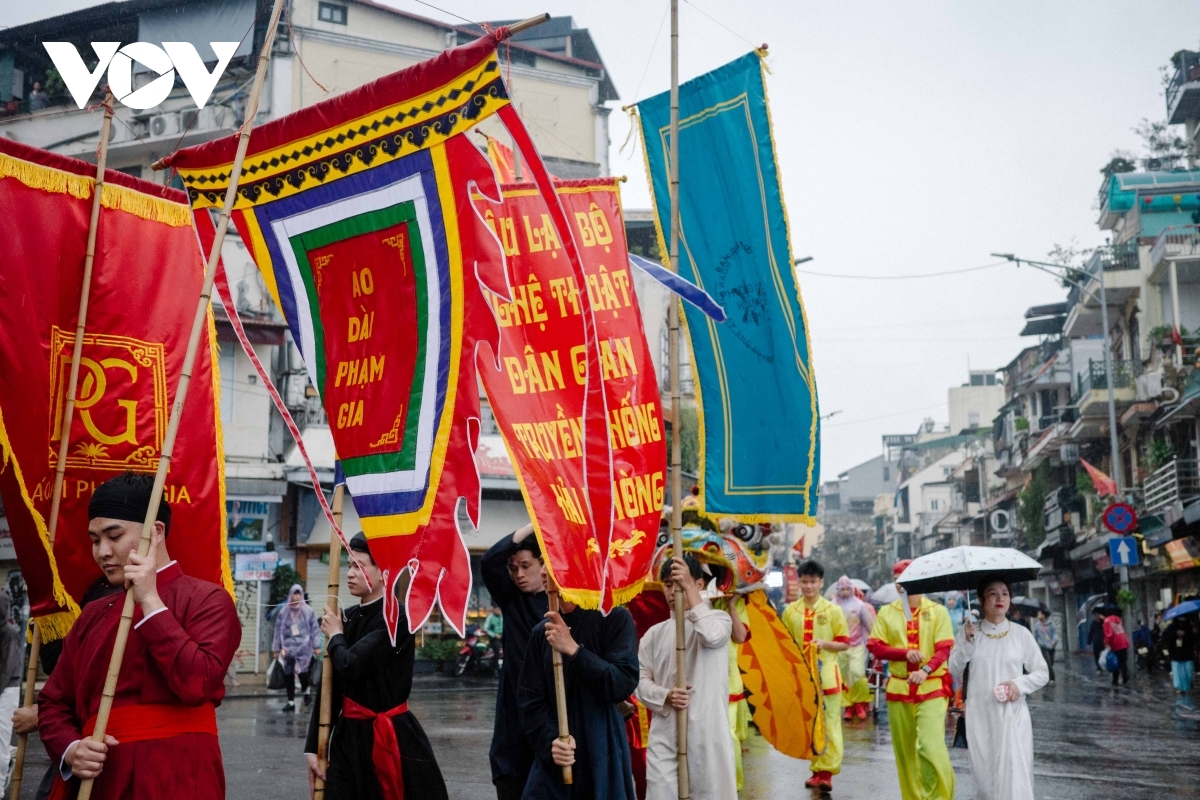
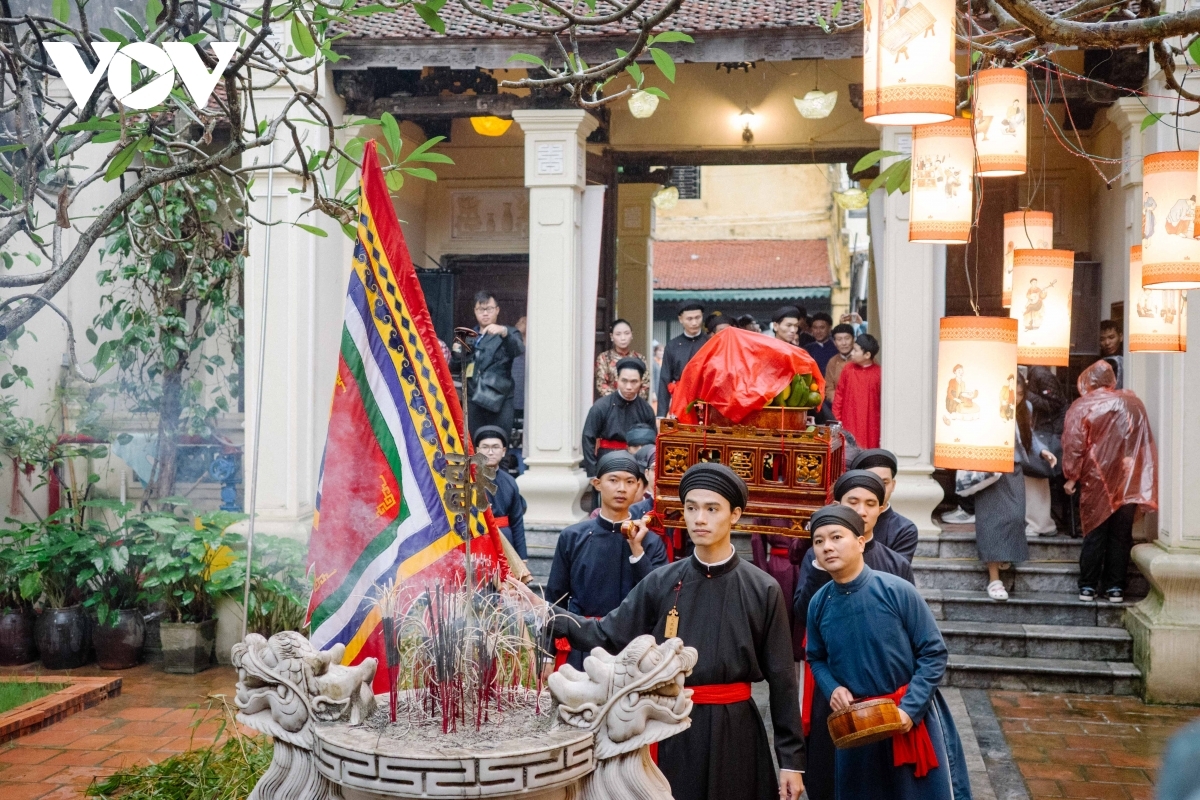
Set within a heritage space rich in historical character, the procession, featuring ceremonial flags, traditional costumes and ritual music, recreates distinctive ceremonial traditions, marking the beginning of spring’s festive spread throughout the Old Quarter of the capital.
A traditional costume parade featuring hundreds of historical outfits creates a vivid flow of colours through the Old Quarter. Carefully reconstructed designs help introduce the beauty and cultural depth of Vietnam’s traditional attire to the public.
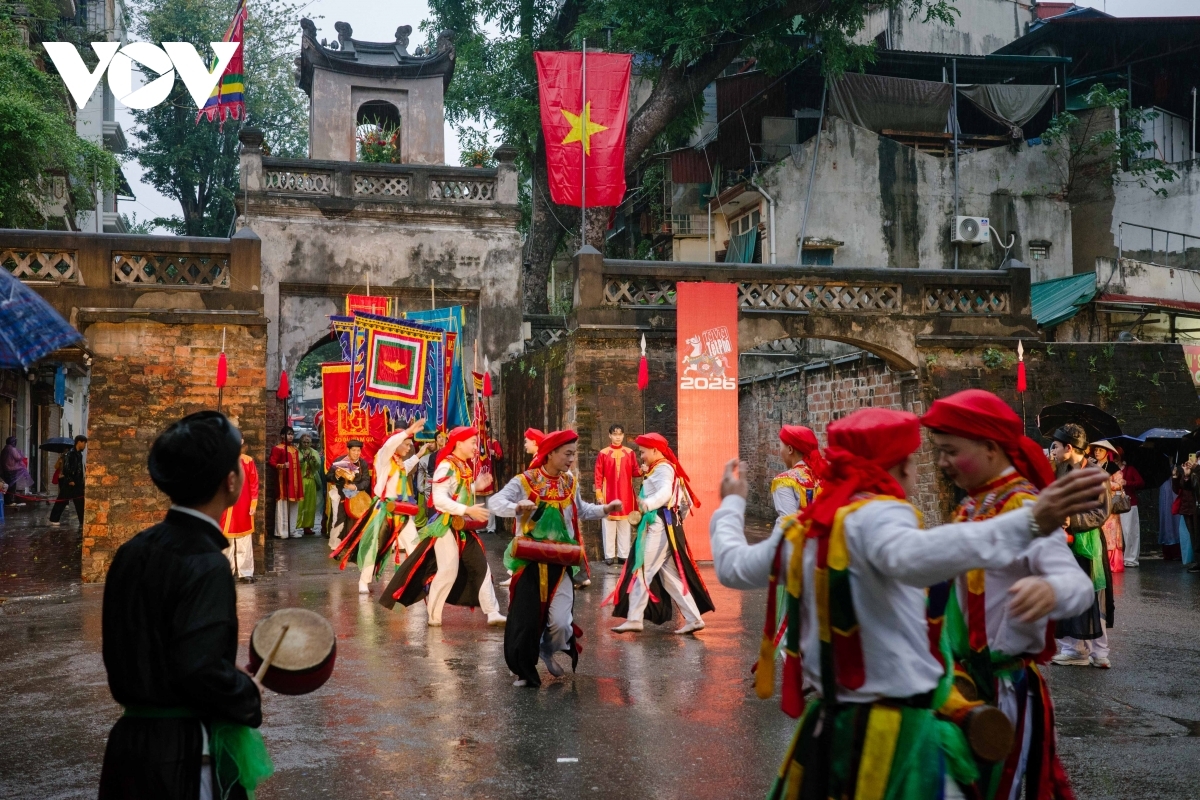
The festive spring atmosphere is further enlivened by a performance of the folk dance “Con di danh bong”, staged in the heart of Hanoi’s Old Quarter. The lively dance add a joyful and dynamic touch, reflecting the vibrant spirit of traditional festival culture.
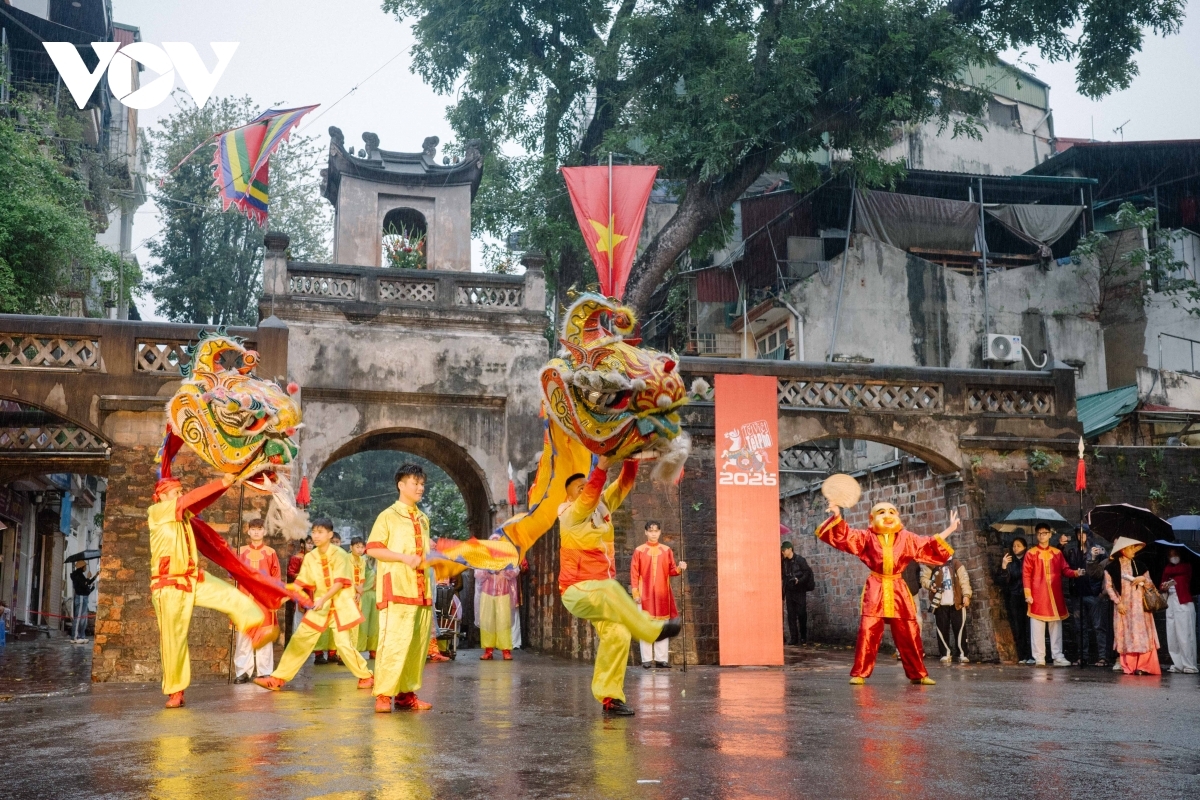
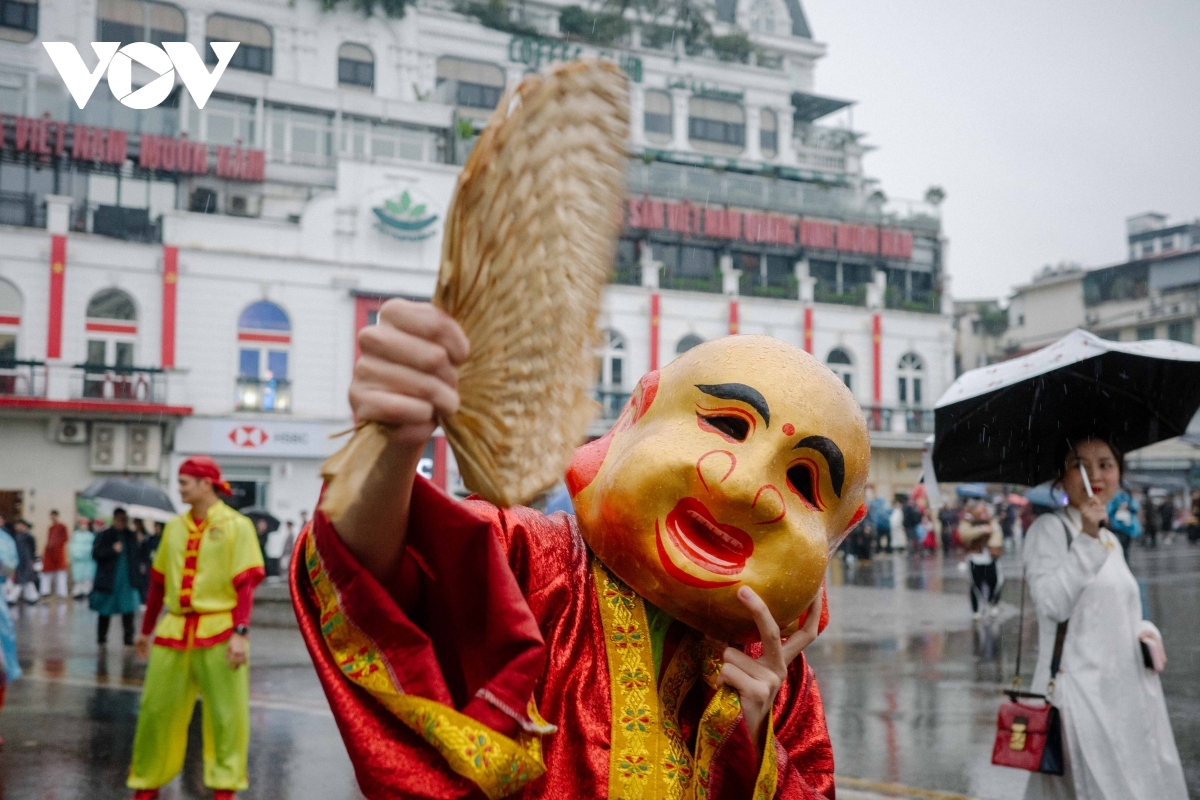
The sounds of drums and gongs, blending with the festival’s vibrant colours, create a vivid spring tableau that celebrate the value of folk arts and spread wishes for a peaceful and auspicious new year.
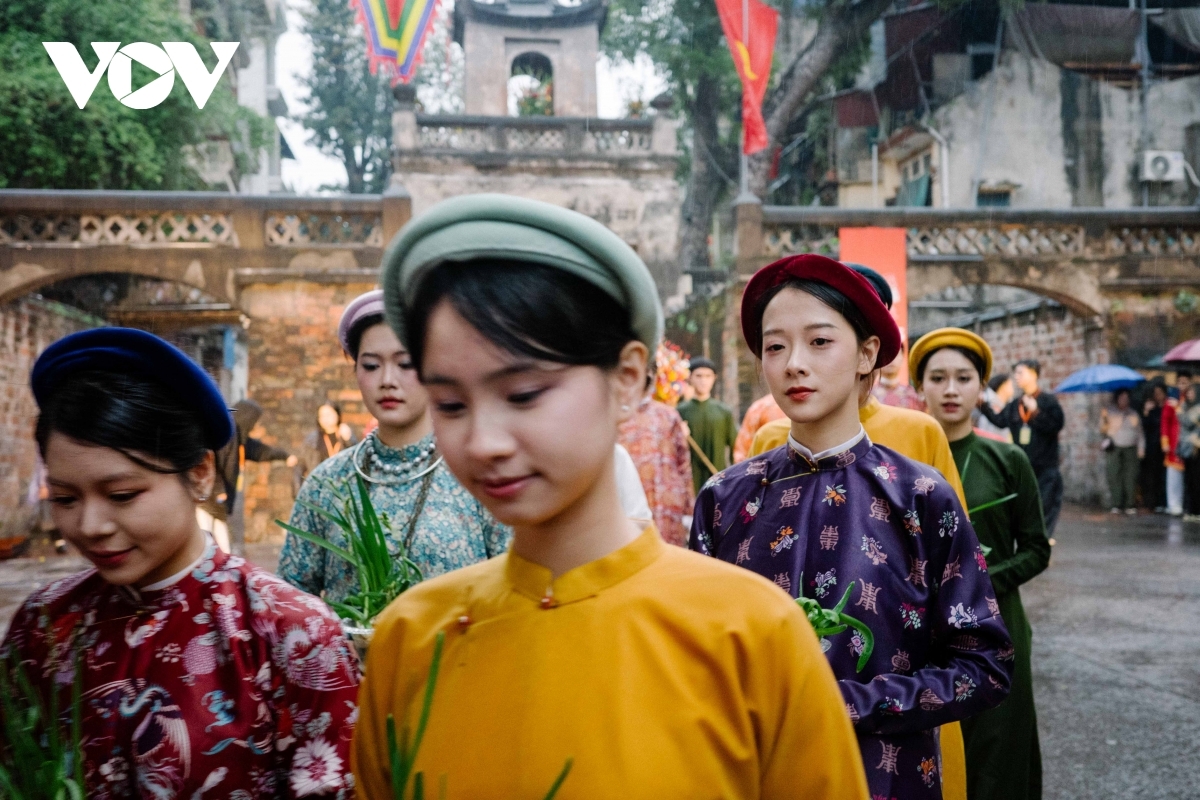
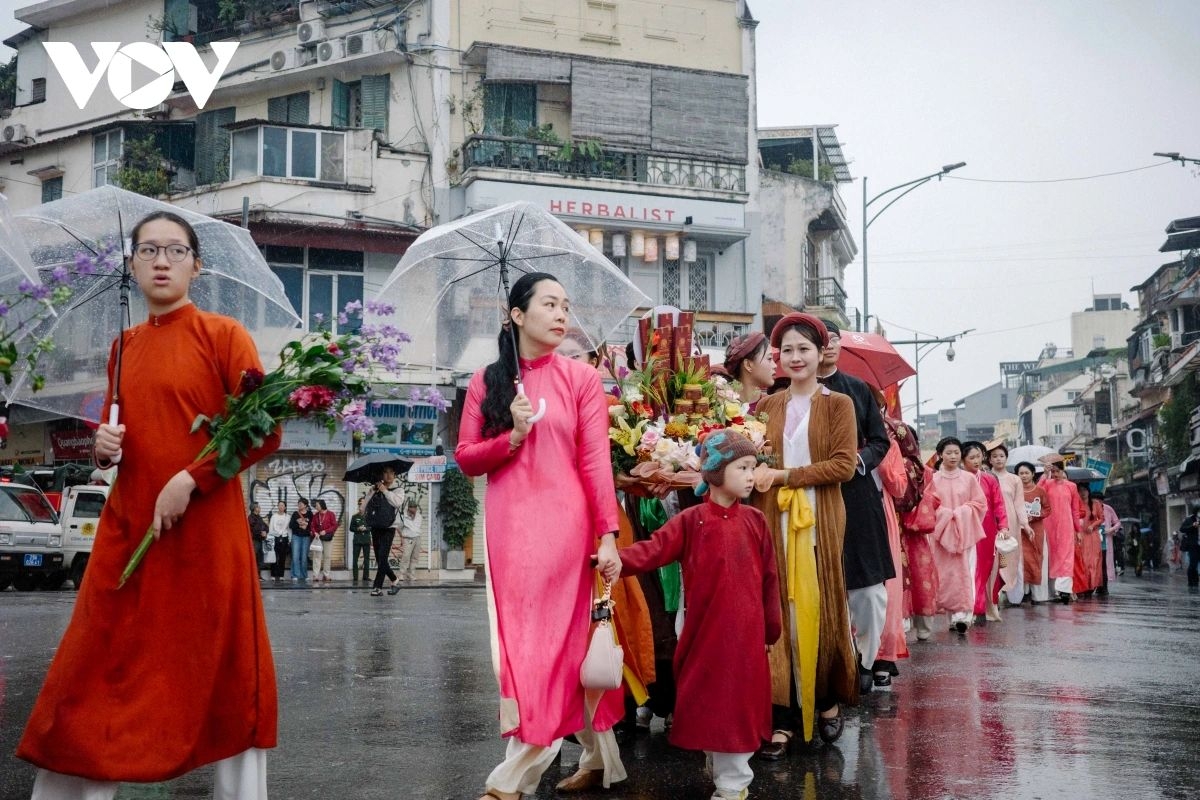
Young participants, dressed in traditional attire, parade through the Old Quarter with a dignified and graceful demeanor.
Young participants in traditional attire join the parade through Hanoi’s Old Quarter, helping recreate the elegance and refinement of Vietnamese dress across different historical periods.
The traditional procession moves through the Old Quarter’s streets, drawing large crowds of residents and visitors. The area is transformed into a vibrant cultural stage, where festival rituals are reenacted against the backdrop of Hanoi’s distinctive urban heritage.
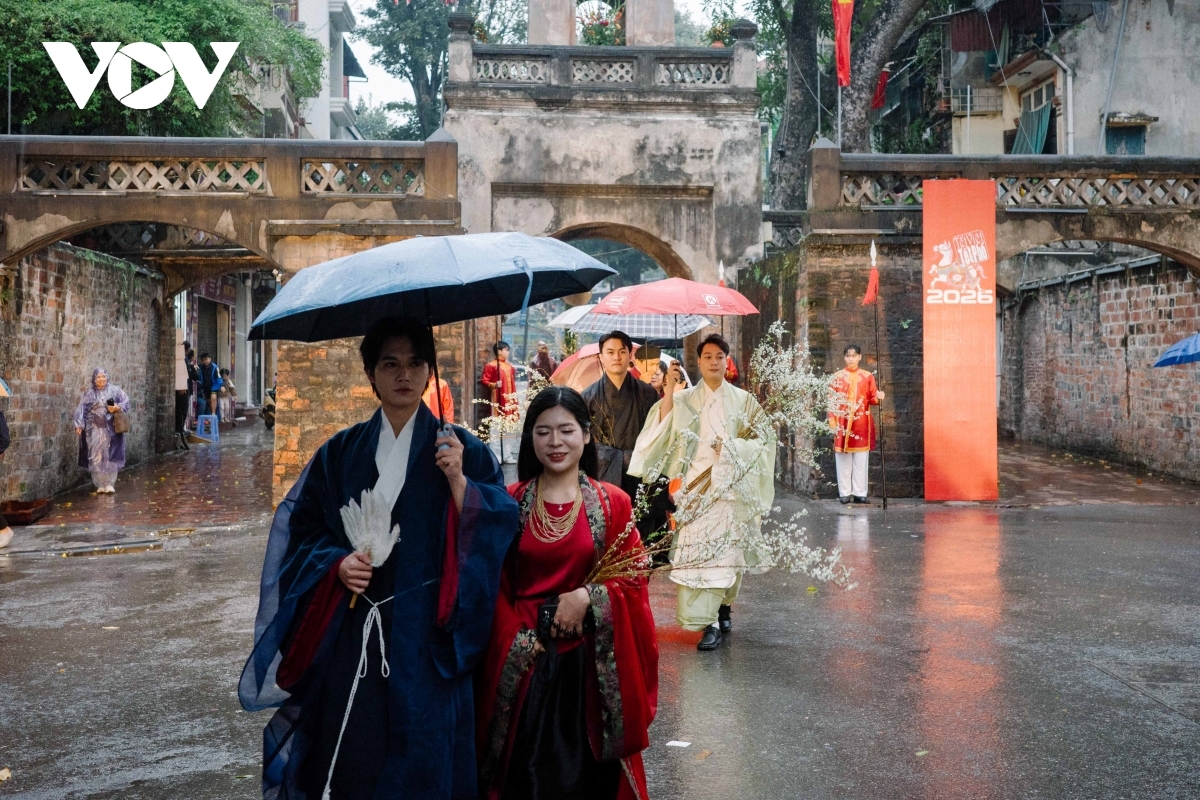
A walking procession in traditional attire move through the Old Quarter, creating a vibrant flow of culture in the heart of Hanoi. The blend of historical costumes, ceremonial flags and ritual music recreates the atmosphere of traditional Tet, evoking the sense that spring is returning to every corner of the old streets.
The procession’s journey through the streets not only creates a vibrant festival scene, but also highlights the intergenerational continuity of culture, spreading a message of heritage preservation and respect for national cultural identity.
A joyful and lively atmosphere spread throughout the festival as residents and visitors immerse themselves in traditional cultural activities welcoming the new spring.
Rhythmic footsteps paired with the vibrant colours of traditional attire help recreate the spirit of traditional Tet, spreading the cultural charm of Thang Long amid the rhythm of modern urban life.
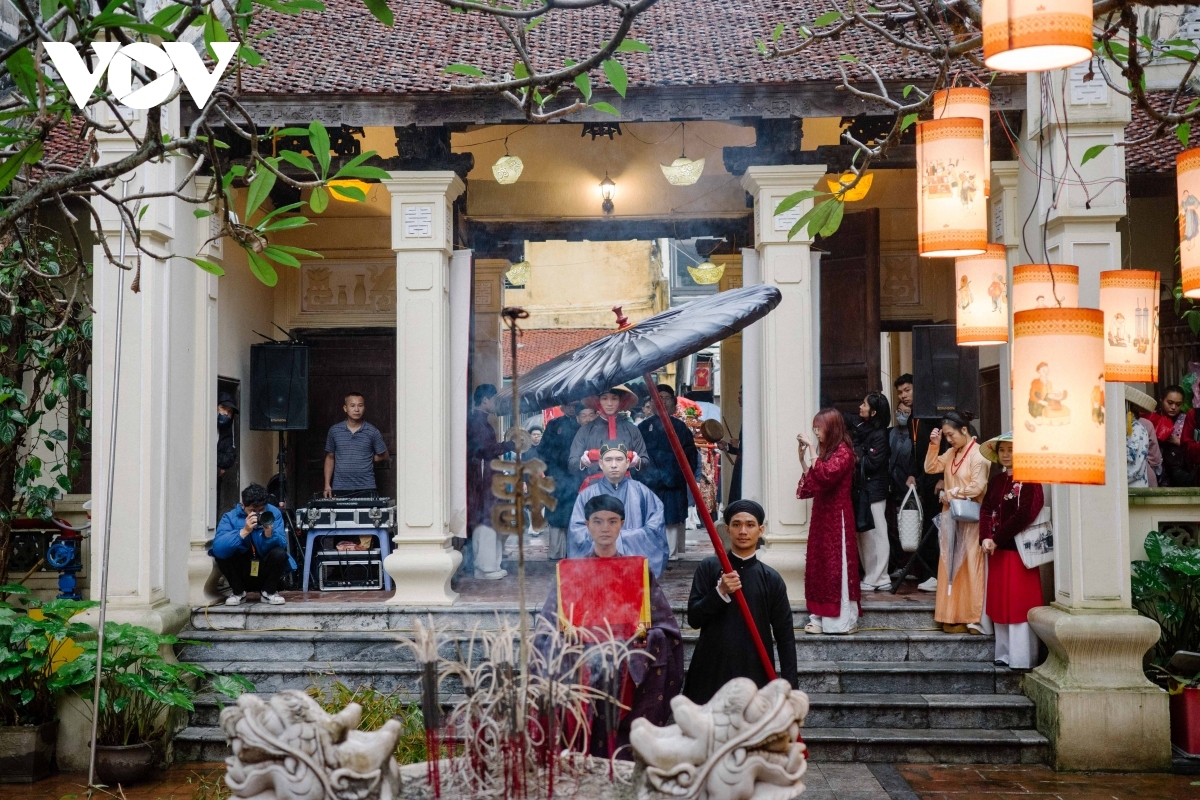
After moving through the Old Quarter’s streets, the procession enter the courtyard of Kim Ngan Communal House in a solemn and reverent atmosphere. Offering rituals express gratitude to past generations and convey wishes for a peaceful and harmonious new year for the Old Quarter community.
The moment when the festival procession gathers at the historic site creates a vivid cultural tableau, linking past and present in the early spring festivities.
The solemn rituals held within the heritage setting highlight the spiritual significance and enduring cultural values embedded in the lives of Hanoians whenever Tet and spring arrive.
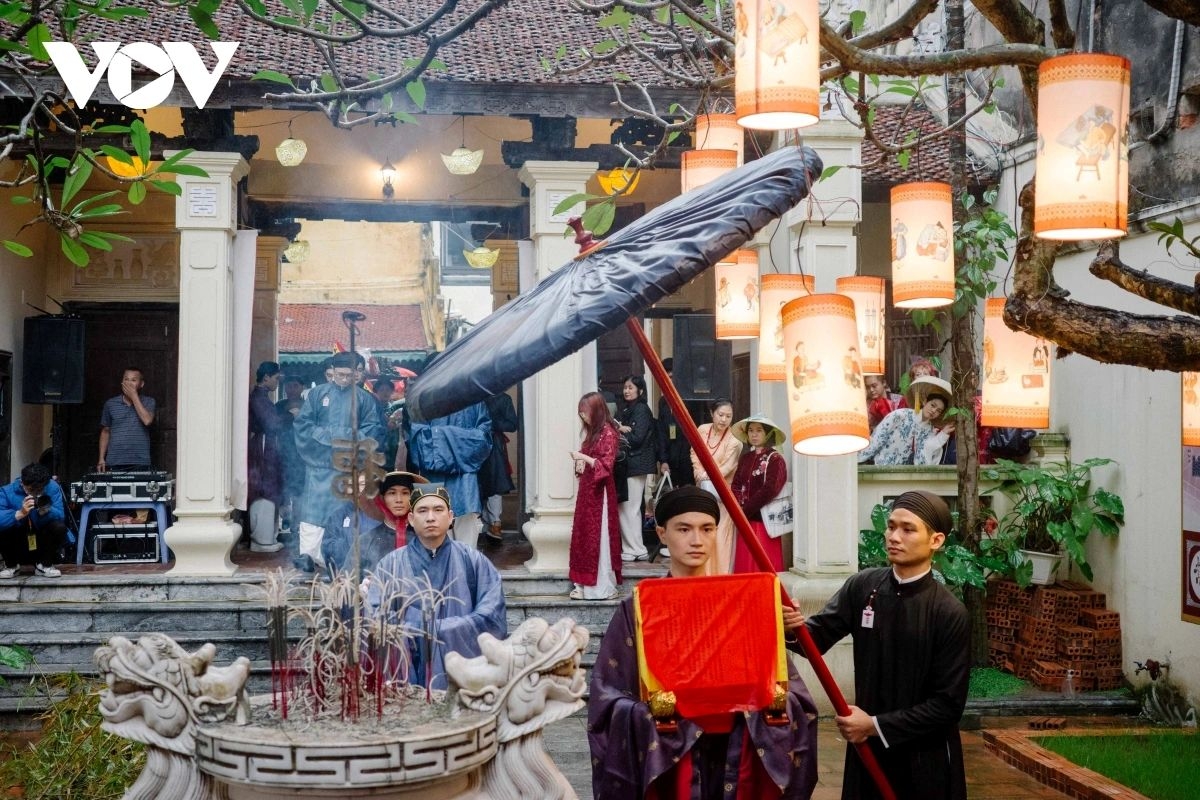
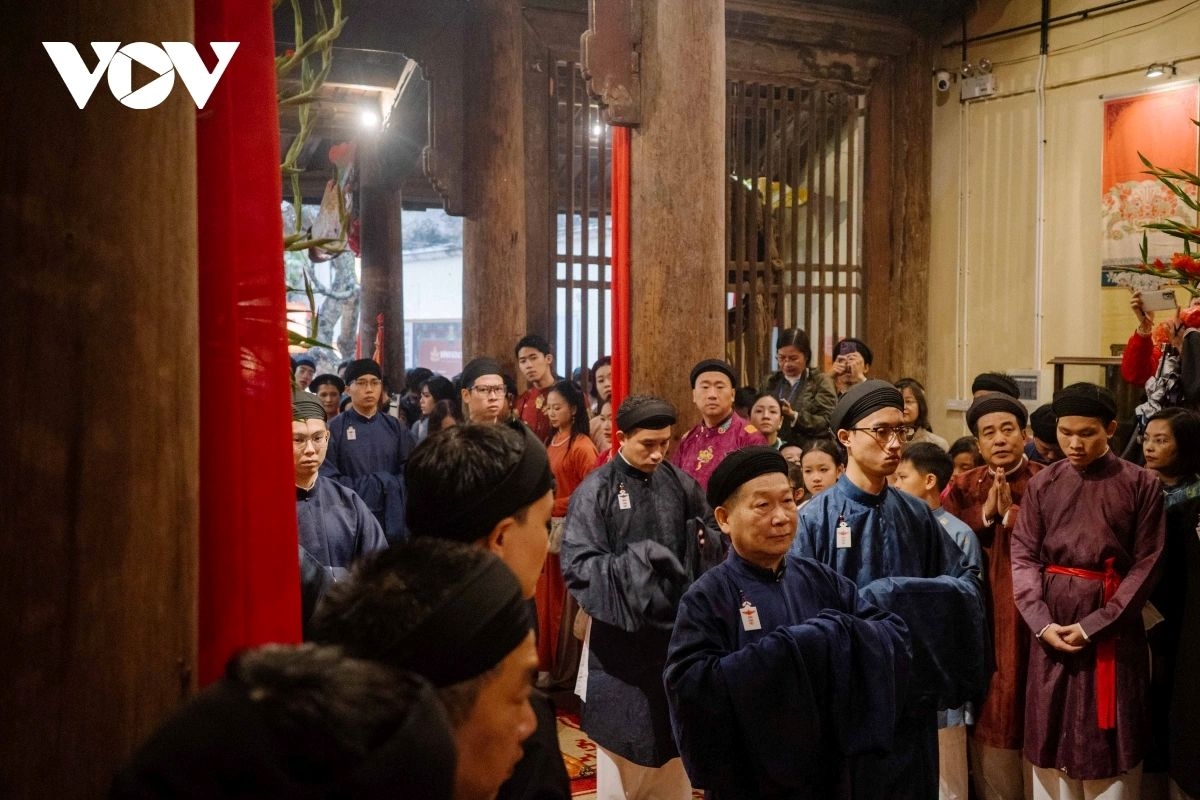
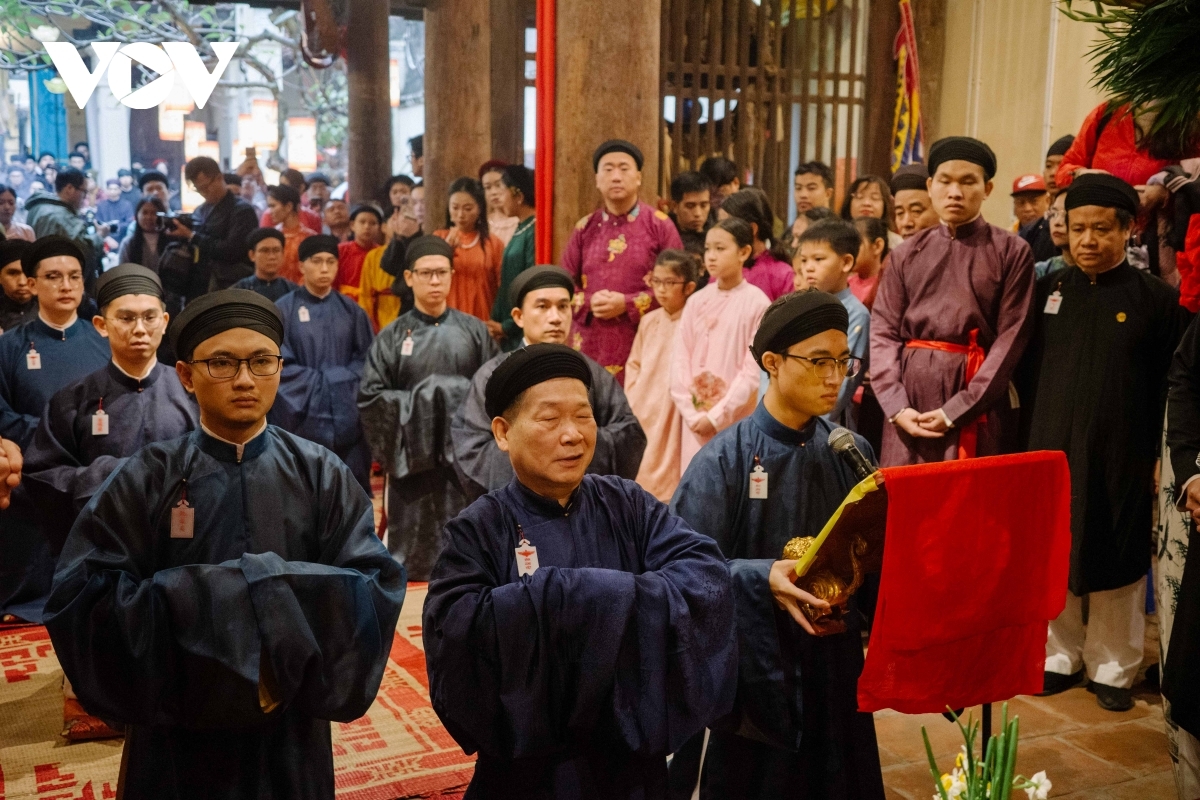
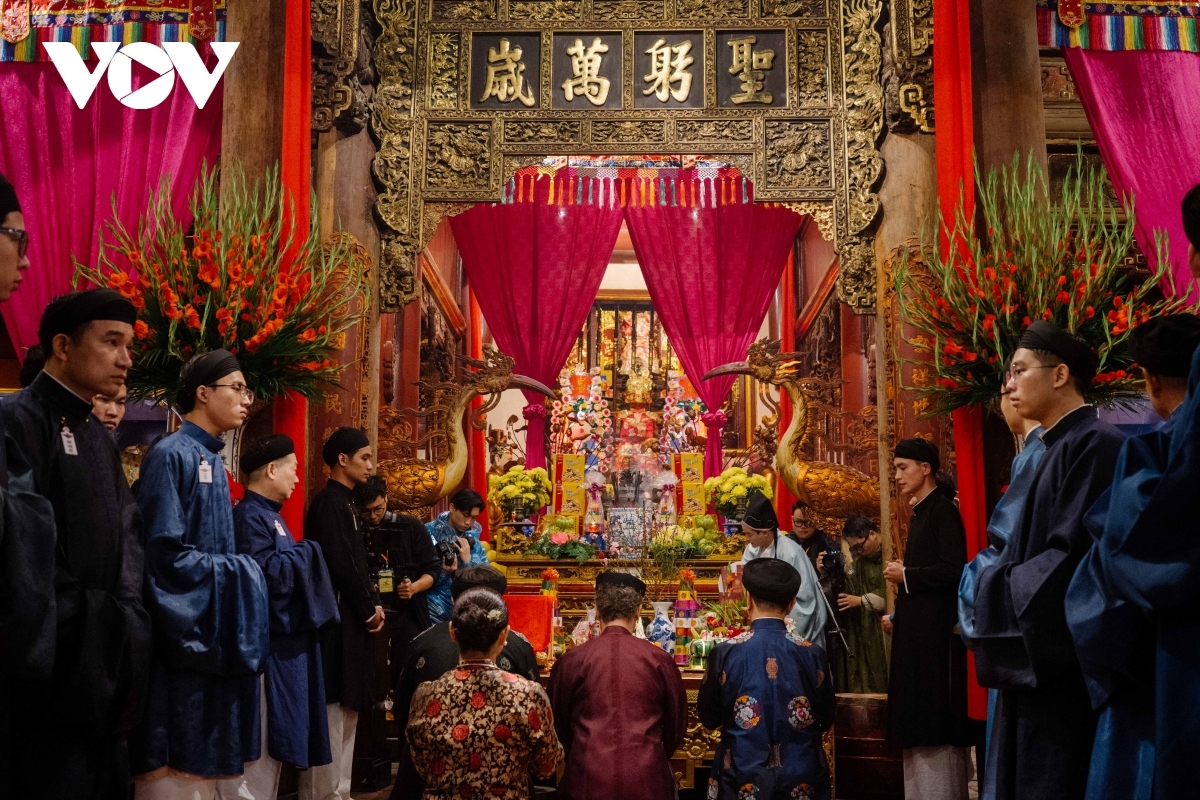
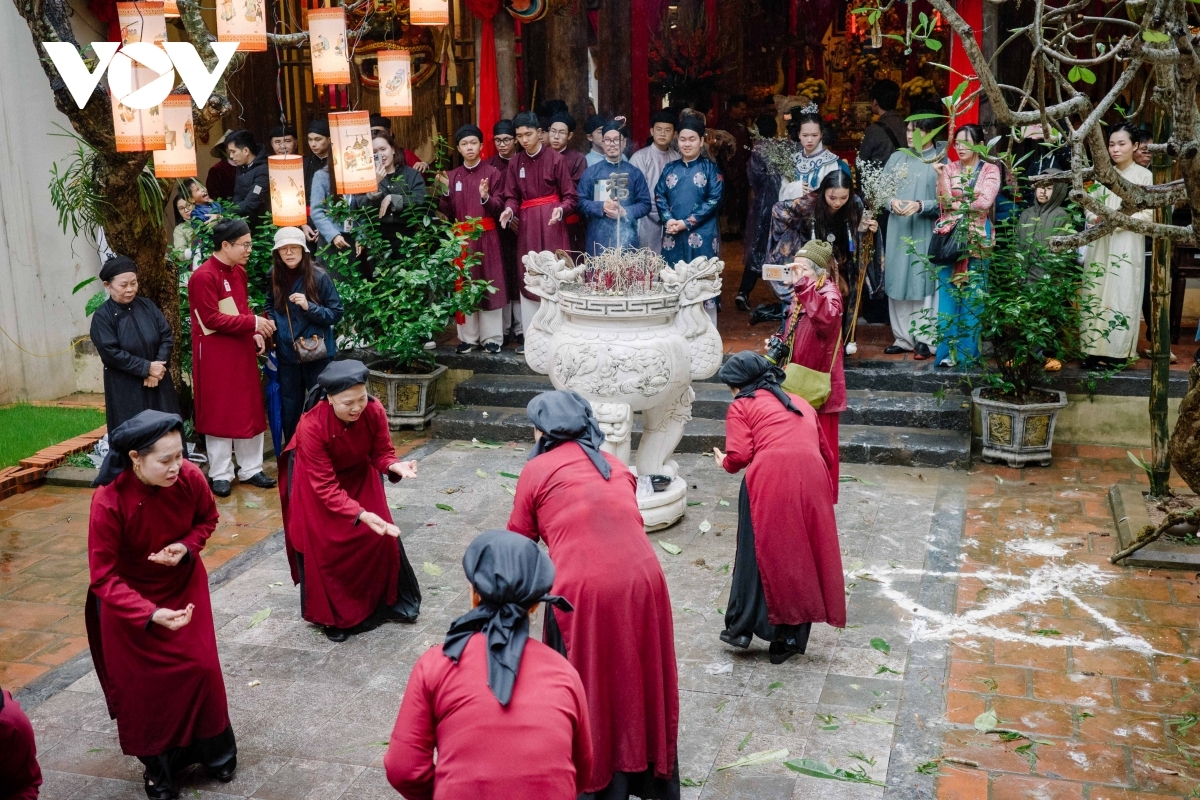
Within the ancient architectural setting of a communal house nestled in the heart of the city, the Cáo Yết ritual is conducted with the participation of village elders, ceremonial officials, and large numbers of residents and visitors. Wafts of incense smoke and the sound of ritual music create a sacred atmosphere, reviving a long-standing form of traditional Vietnamese spiritual practice.
Wearing traditional ceremonial attire, the ritual delegation carries out incense offerings, recites ritual prayers, and performs each step of the ceremony in accordance with ancient customs. Every movement is executed with care and precision, strictly following the conventions of traditional Vietnamese village rituals, expressing reverence for the Tutelary Deity regarded as the protector and unifying spiritual figure of the community.
The Kim Ngan Communal House falls into a solemn stillness throughout the ritual. The warm glow of candles, the lingering scent of incense, and the slow, measure rhythm of drums and gongs combined to create a cultural space rich in traditional identity. Set against the usually bustling backdrop of Hanoi’s Old Quarter, the Cáo Yết ritual becomes a moment of quiet reflection, allowing participants to more deeply appreciate the value of the city’s intangible spiritual heritage.
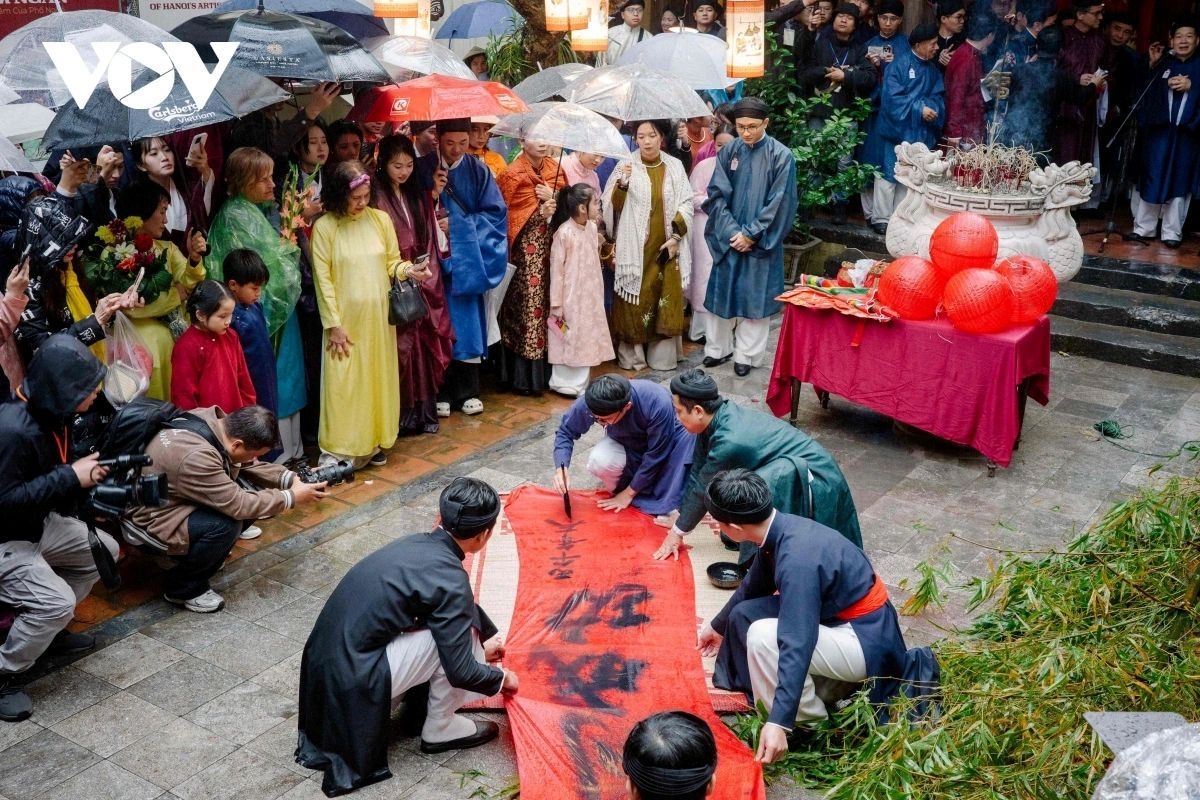
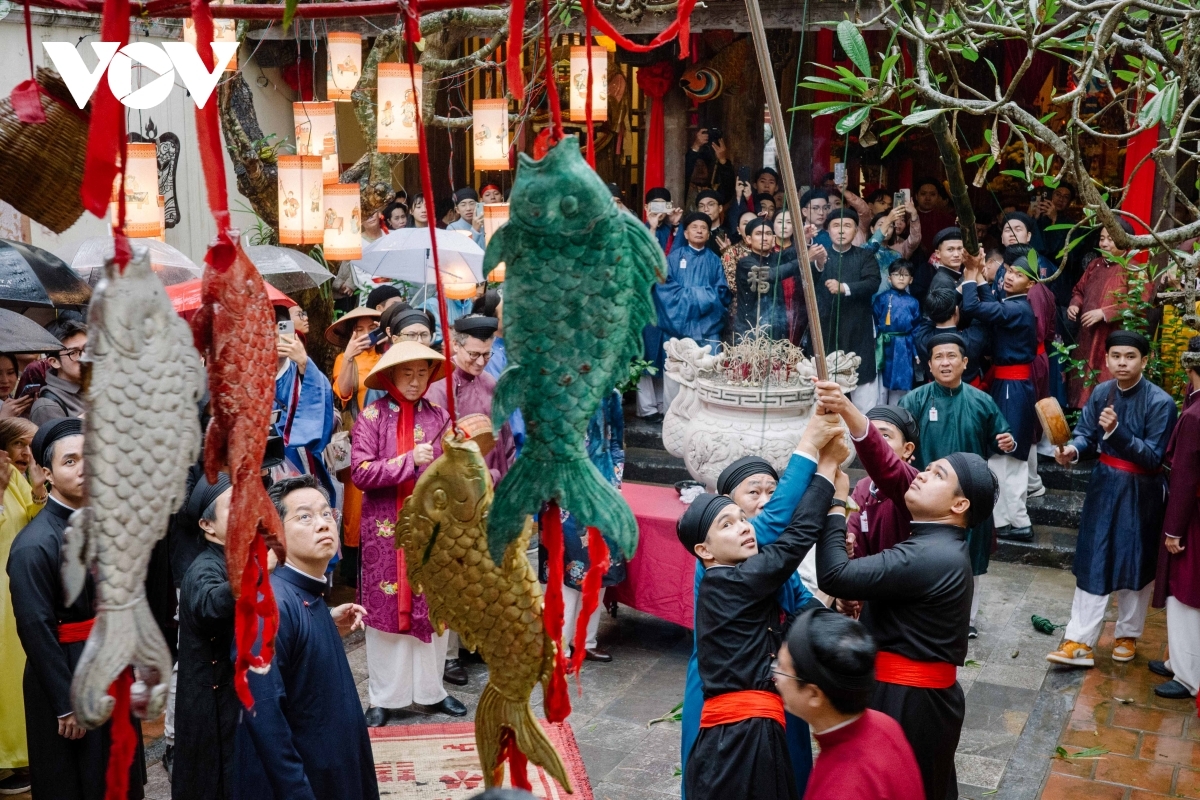
An artisan performs calligraphy, writing the auspicious phrase “Mã đáo thành công” (“Success upon return”) to be hung on the traditional Nêu pole during Tet. In folk belief, the image of a returning horse symbolises victory, smooth journeys, and good fortune, expressing hopes for a prosperous and successful new year. The flowing, graceful brushstrokes not only convey blessings of luck and achievement but also celebrate the enduring art of traditional Vietnamese calligraphy within the festive Tet cultural space.
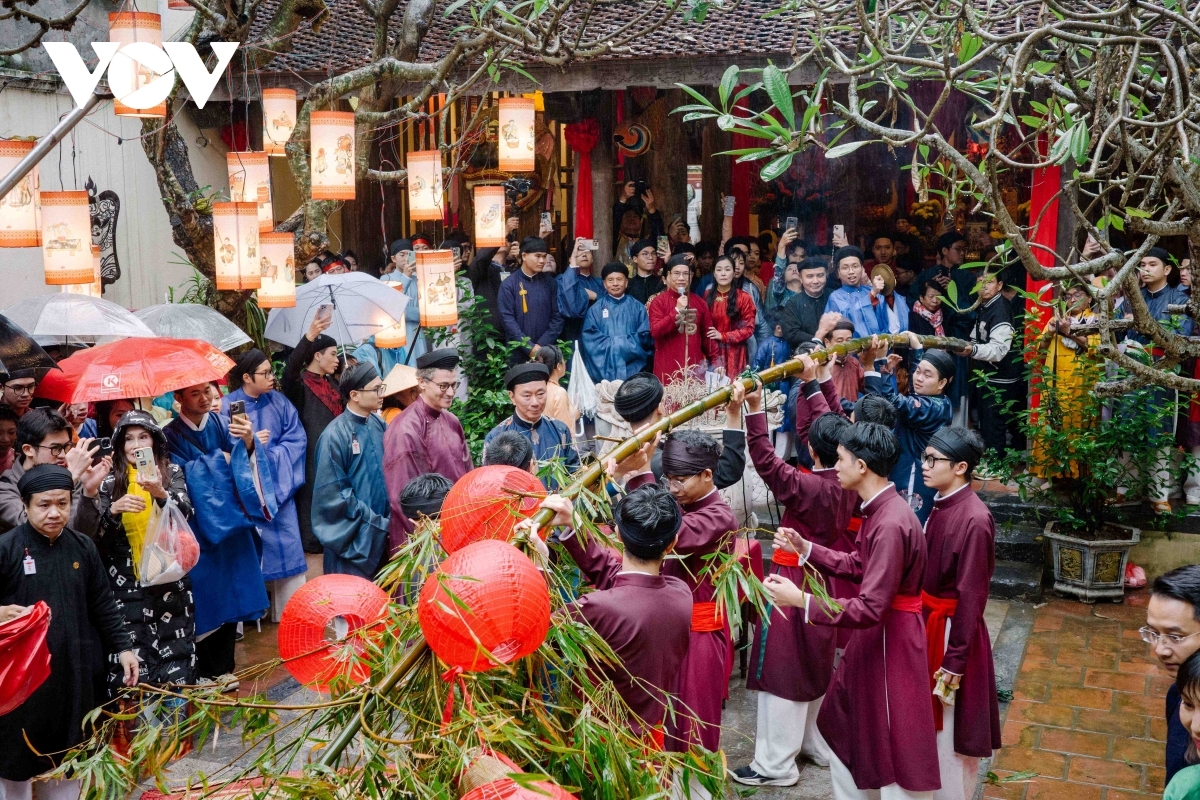
The ritual of erecting the Nêu pole is carried out by artisans in accordance with traditional customs. Adorned with symbolic objects imbued with spiritual meaning, the Nêu pole represents wishes for peace and good fortune, while also serving to ward off misfortune and negative influences in the coming year.
Local residents and visitors watch attentively as the Nêu pole–raising ritual takes place, reflecting strong public interest in traditional Lunar New Year customs. The activity offers valuable insight, especially for younger generations, into the cultural and spiritual significance embedded in Vietnam’s festive traditions.
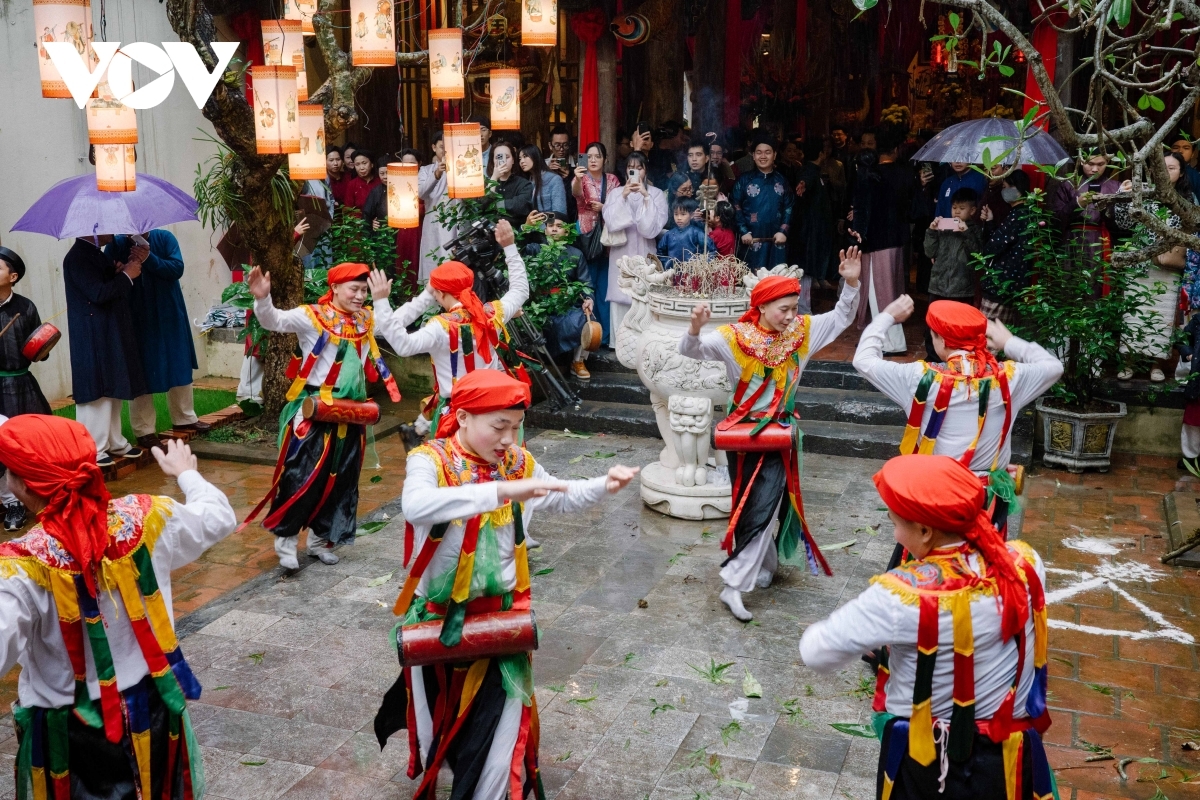
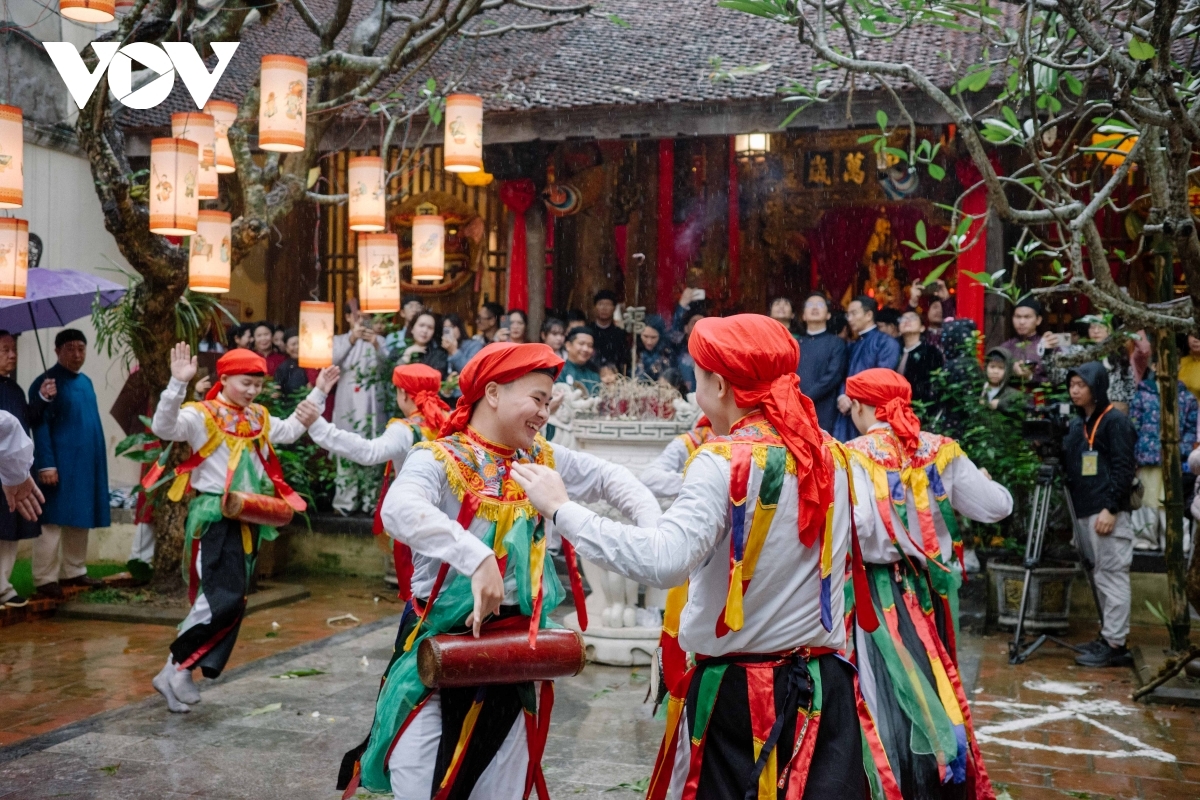
The Bồng Triều Khúc dance, featuring the iconic character known as “con đĩ đánh bồng,” draws widespread attention from spectators. Young men, transformed into maidens in traditional attire, perform graceful and lively movements while beating the bong drum. Originating from Trieu Khuc Village in Thanh Tri District, Hanoi, this distinctive folk dance embodies prayers for good harvests and blessings, while expressing the joyful spirit of traditional festivals.
Beyond its lively and entertaining elements, the performance also reflects traditional beliefs in seeking good fortune and warding off negative influences, conveying hopes for a peaceful and prosperous new year. At the same time, it helps revive the atmosphere of traditional festive celebrations in the heart of Hanoi’s Old Quarter.
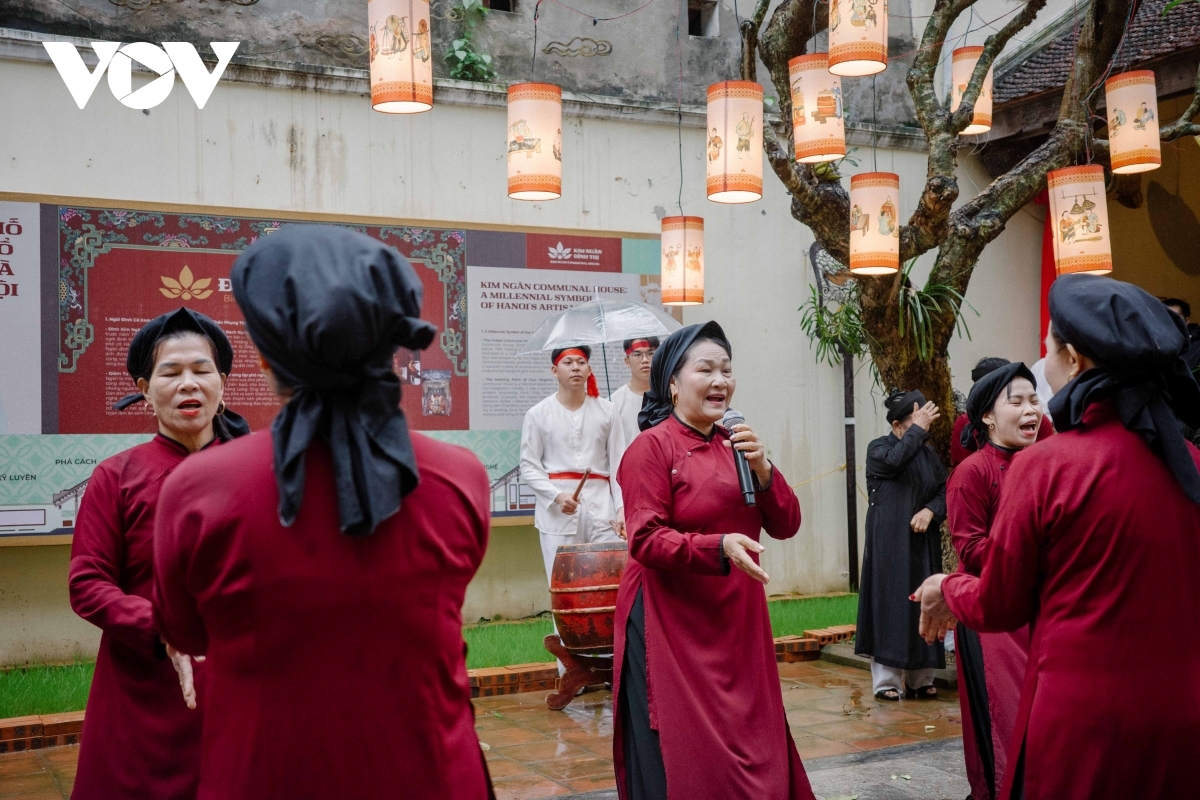
Artisans from Phu Tho’s Xoan singing guild performed Xoan singing at the communal house gate at Kim Ngan Communal House as part of the Tet cultural activities. The performance not only recreates a traditional springtime ritual but also helps bring the intangible cultural heritage of Xoan singing closer to urban audiences.
The Xoan singing performance recreates early-year rituals praying for good harvests and blessings - one of the most important performance layers of this folk art form closely associated with the worship of the Hung Kings. Female Xoan performers, dressed in traditional costumes, carry out gentle, flowing dance movements in harmony with the distinctive rhythm of bamboo clappers. Each verse conveyed wishes for peace, prosperity and abundant crops in the new year, reflecting the rich spiritual life of agricultural communities in Vietnam’s northern midland region.



Bình luận
Bình luận của bạn sẽ được xét duyệt trước khi đăng
Đang tải bình luận...