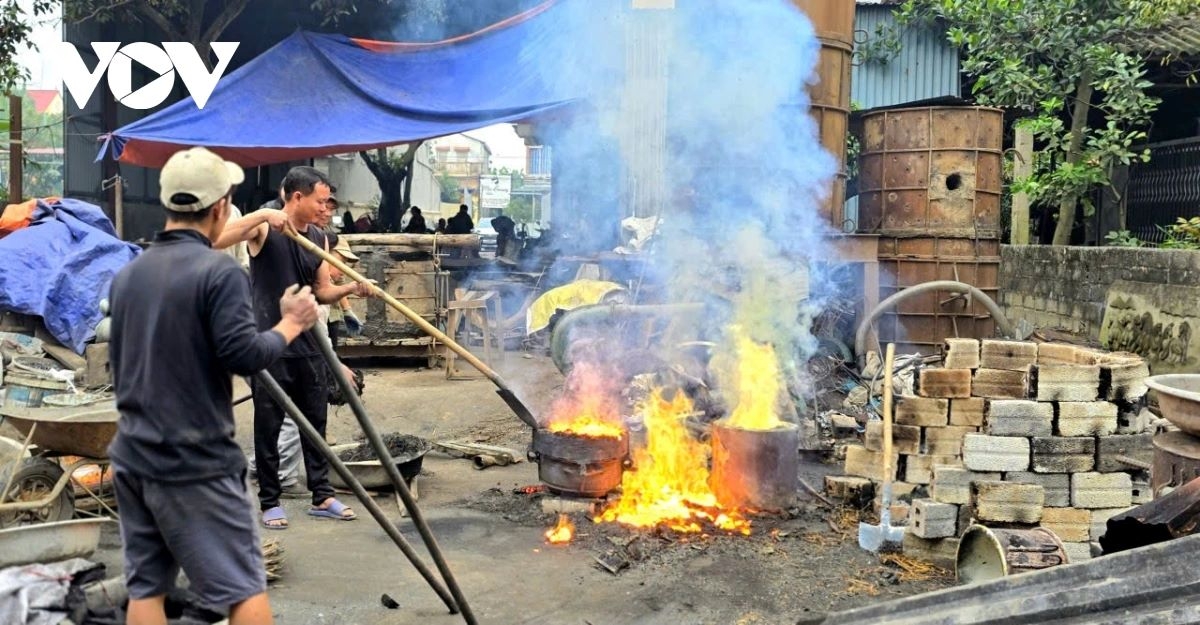
VOV.VN - Furnaces are burning steadily in Tra Dong bronze casting village in Thieu Trung commune, northern Thanh Hoa province, as craftsmen work against the clock to fulfill Lunar New Year orders, the busiest season of the year for the traditional craft.
Amid the winter chill, flames from the furnaces light up the busy faces of workers as they mold casts and pour molten bronze to supply the market.
Tra Dong village, also known as Che village, is long known for its traditional bronze casting craft. According to local elders and Meritorious Artisan Dang Ich Hoan, the craft has been practiced and passed down for thousands of years, with its distinct identity rooted in a fully manual production process.
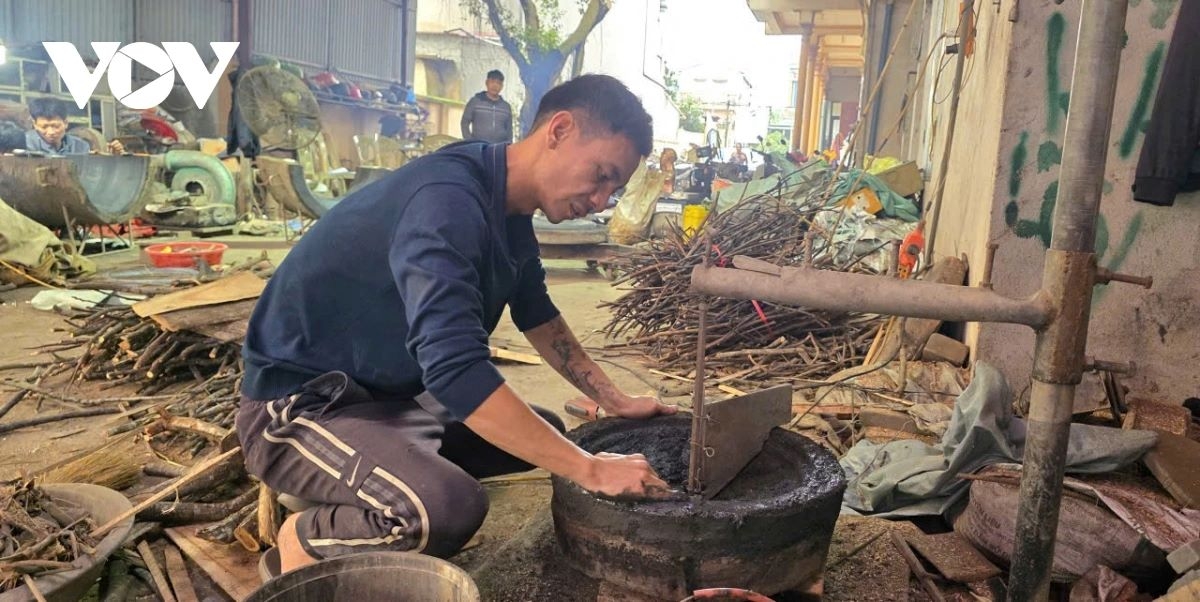
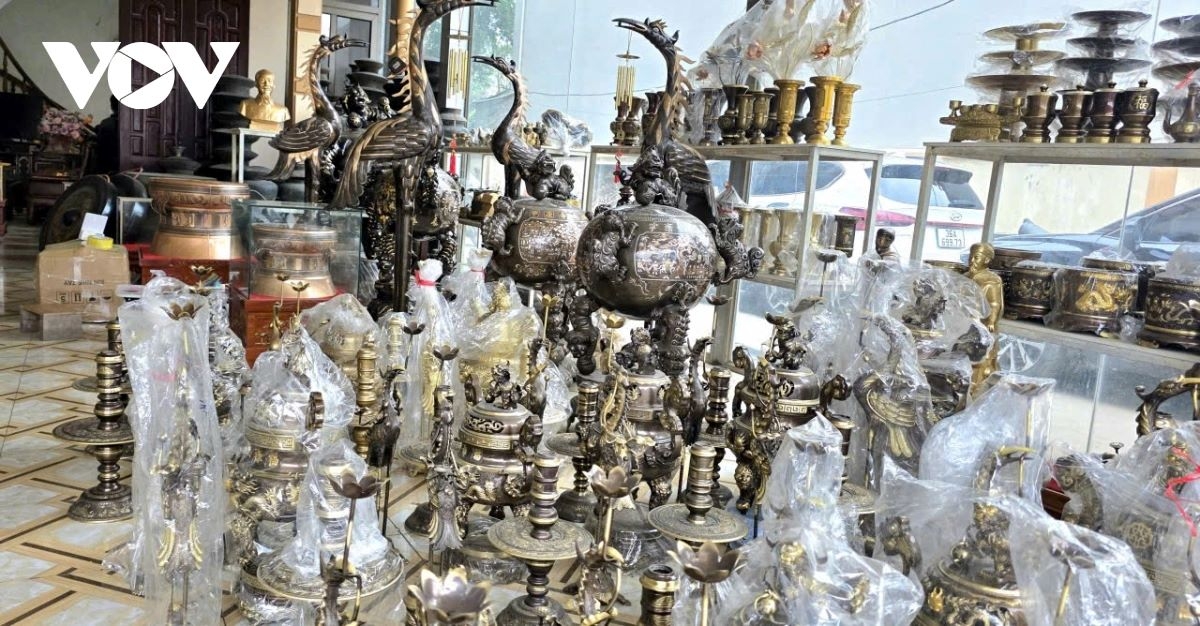
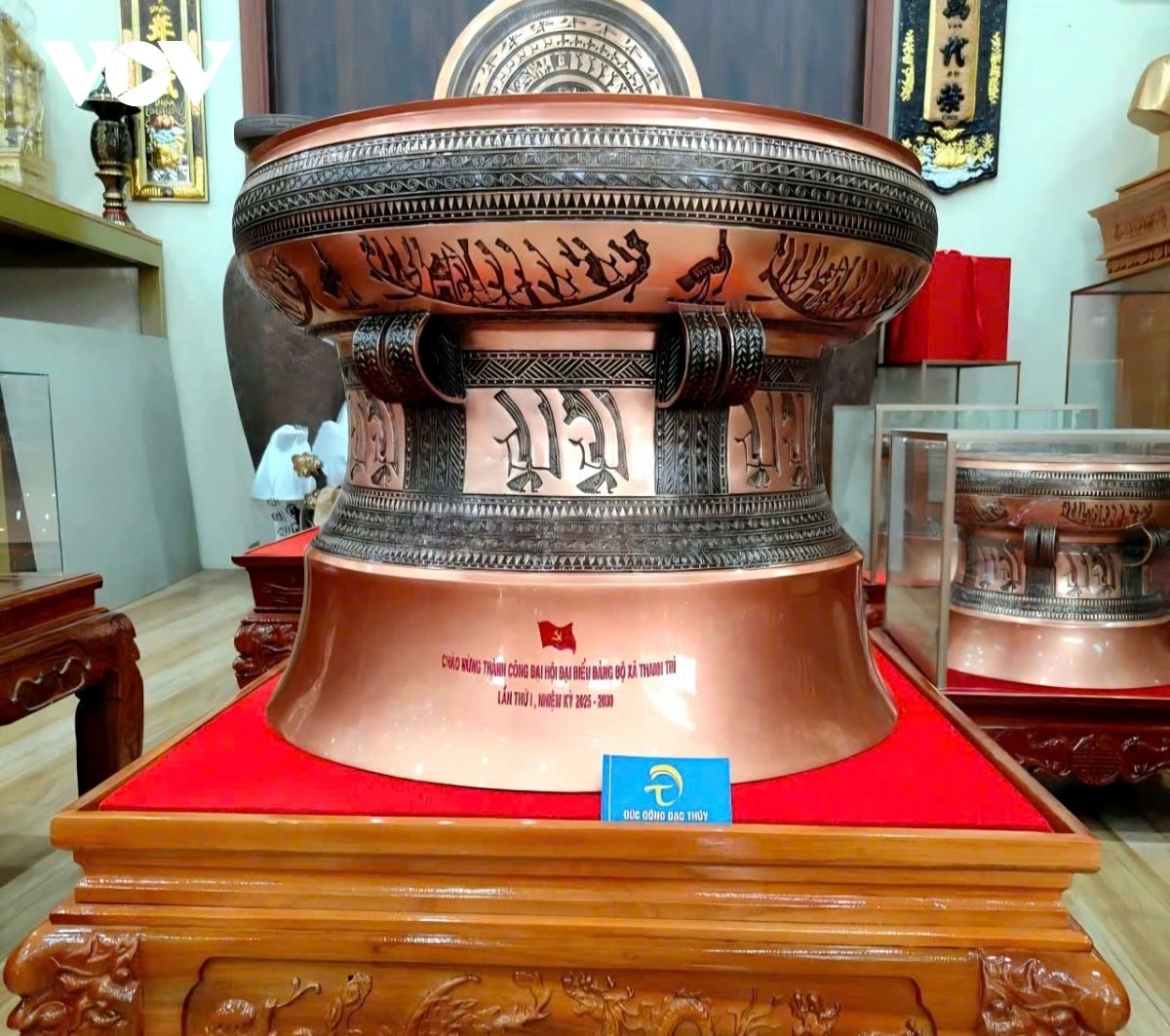
From simple raw materials such as scrap bronze, charcoal, clay and rice husks, skilled and dedicated artisans craft products of high artistic value. Each piece, from bronze drums and jars to crane and turtle statues and ritual sets, reflects patience and refined aesthetic judgment.
The path of preserving the craft is not always smooth. Artisan Dang Ich Hoan says the village has gone through many ups and downs, including periods when bronze products lost ground to cheaper modern materials such as aluminum, plastic and stainless steel with mass-produced designs. Over the past decade, however, Tra Dong’s bronze casting craft has seen a strong revival as consumer interest in traditional cultural values has risen.
Recognition of Tra Dong’s bronze casting craft as a national intangible cultural heritage in 2018 serves as an important spur, reinforcing its standing and encouraging artisans to keep the furnaces burning.
To prepare for the Lunar New Year market, production facilities in Tra Dong begin ramping up from mid–the tenth lunar month. The village now has four products certified under Vietnam’s OCOP program at the four-star level and is completing procedures to upgrade one product to five stars this year, showing a more professional shift as cultural value is increasingly aligned with modern quality standards.
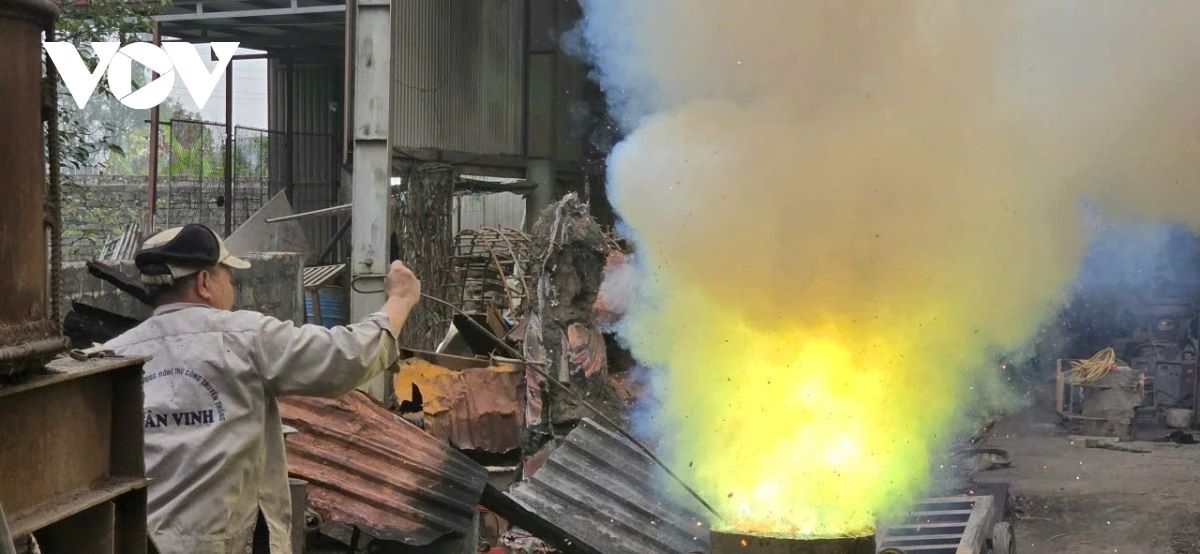
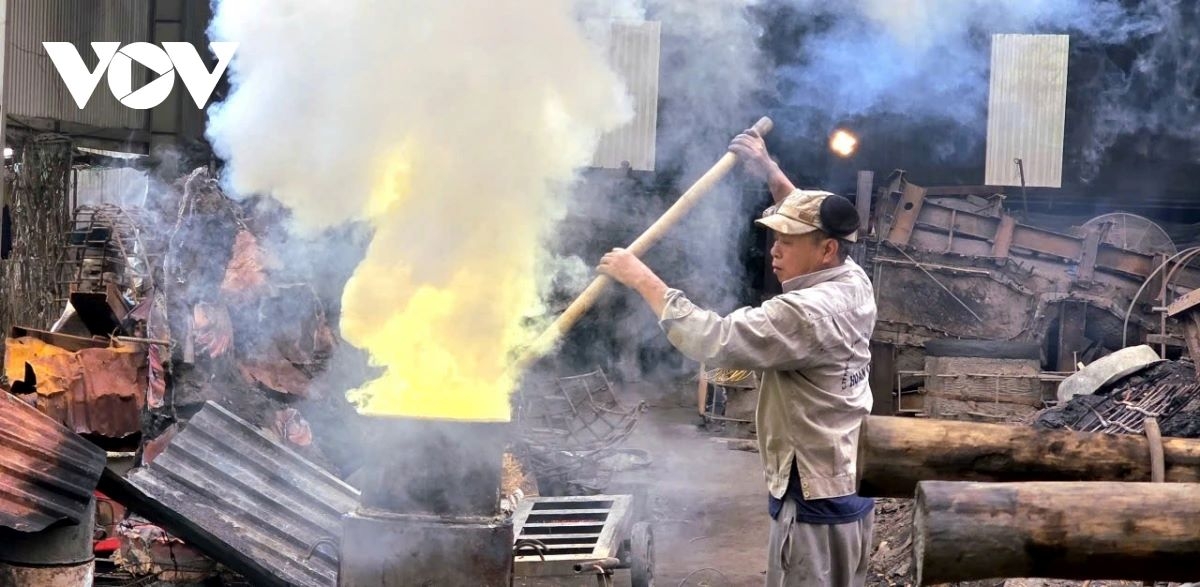
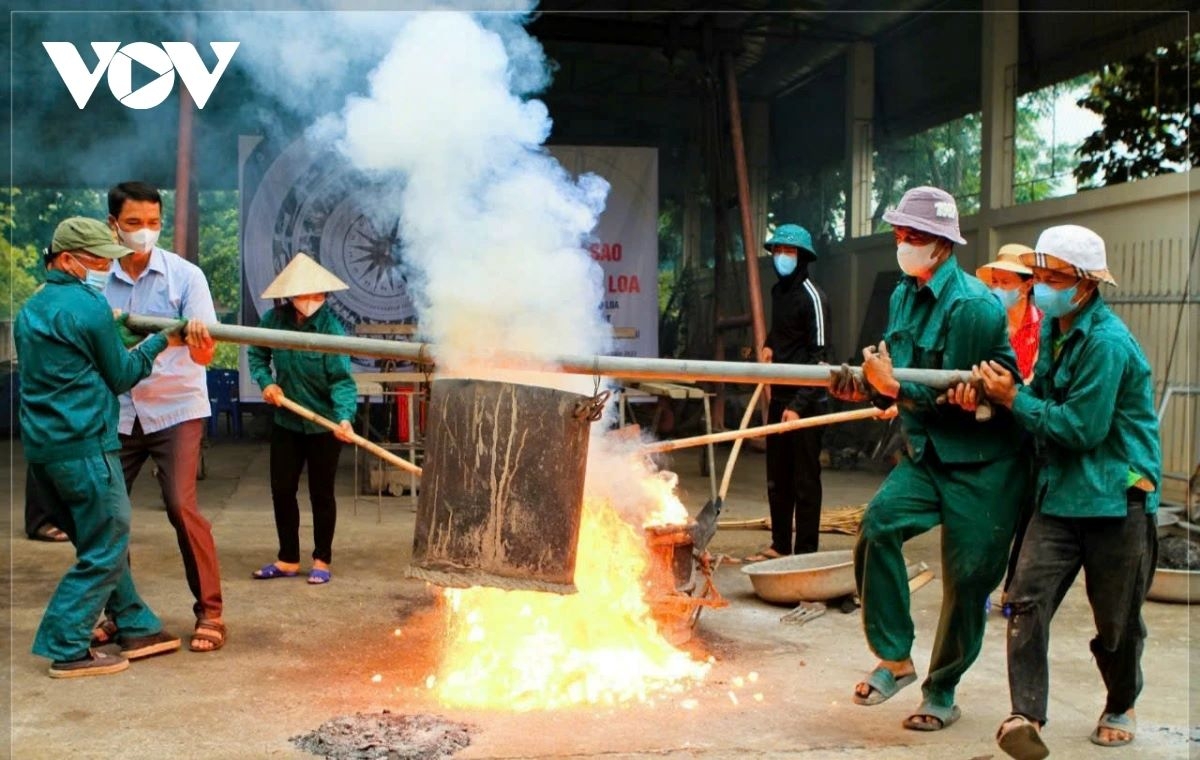
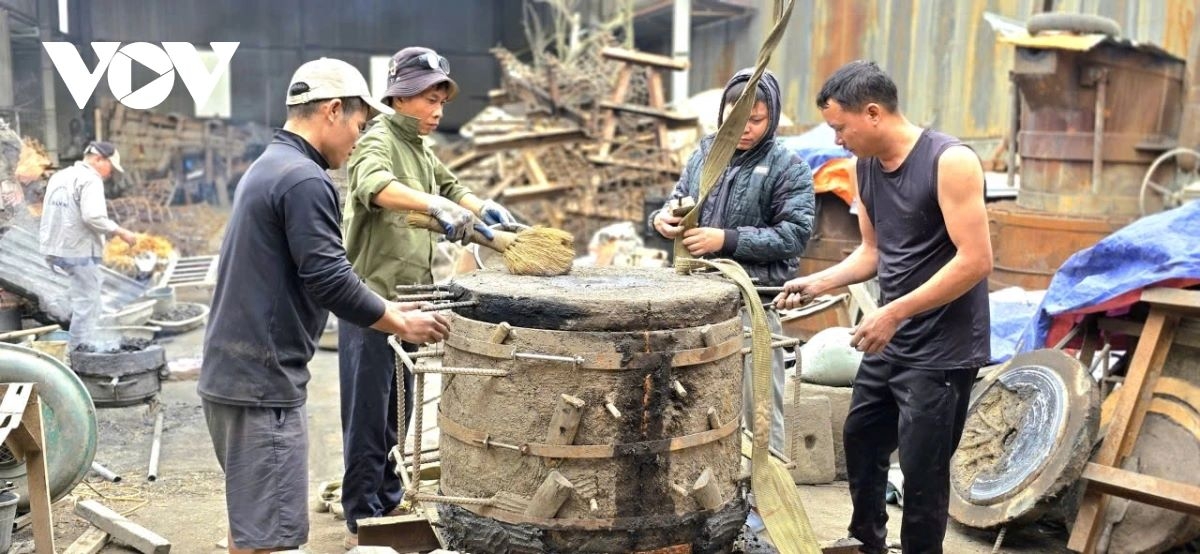
From the glowing furnace, skilled workers move in sync as they carry a batch of red-hot bronze out of the fire. Heat scorches their faces, yet each step remains steady and sure.
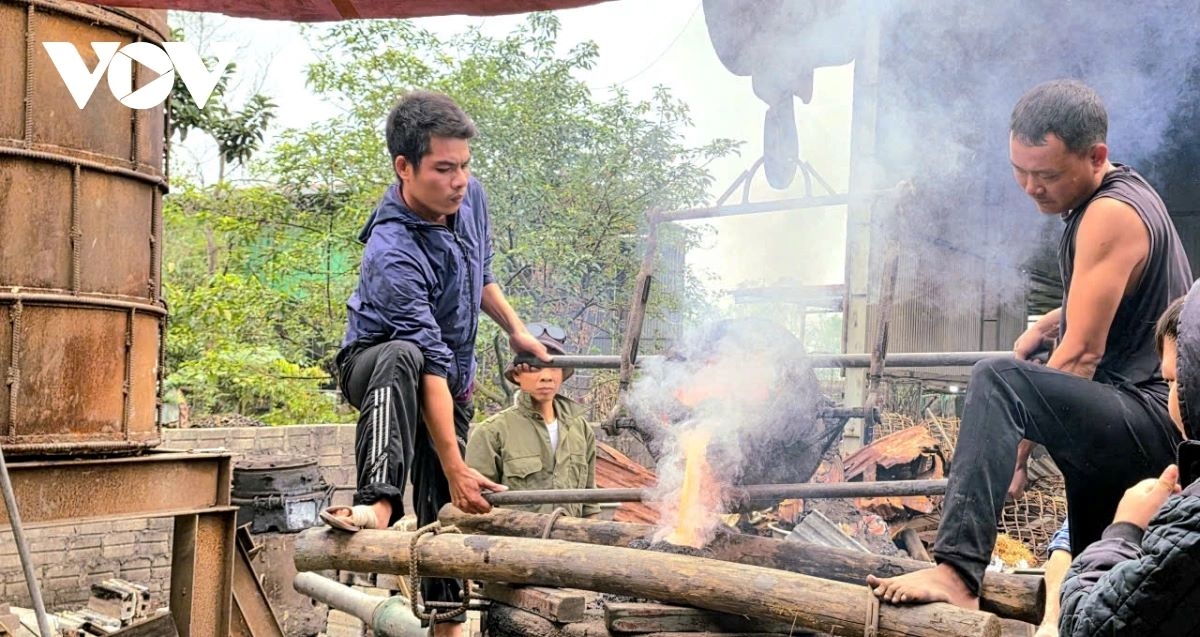
Workers coordinate closely as they pour molten bronze into molds. A moment’s delay can ruin a casting, so every movement reflects experience, focus and steady hands honed by years in the craft.
After the molds are filled, workers quickly move to the next stage, covering them with sand and packing in clay to secure the form and allow the metal to cool evenly, preventing cracks. The pace is brisk but careful, with eyes fixed on the molds, as a casting succeeds only when the metal has fully settled.
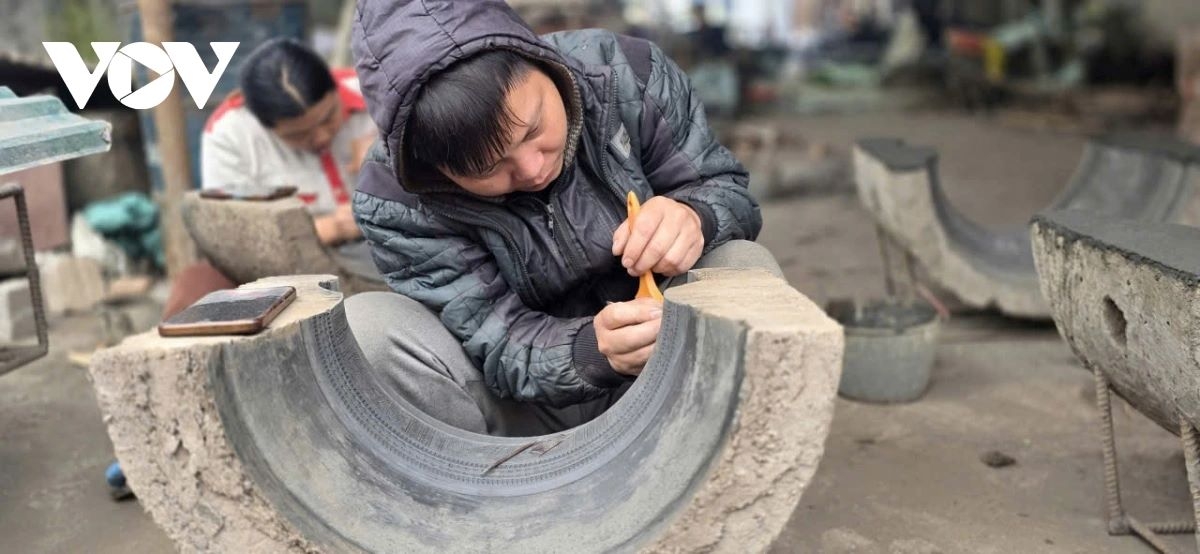
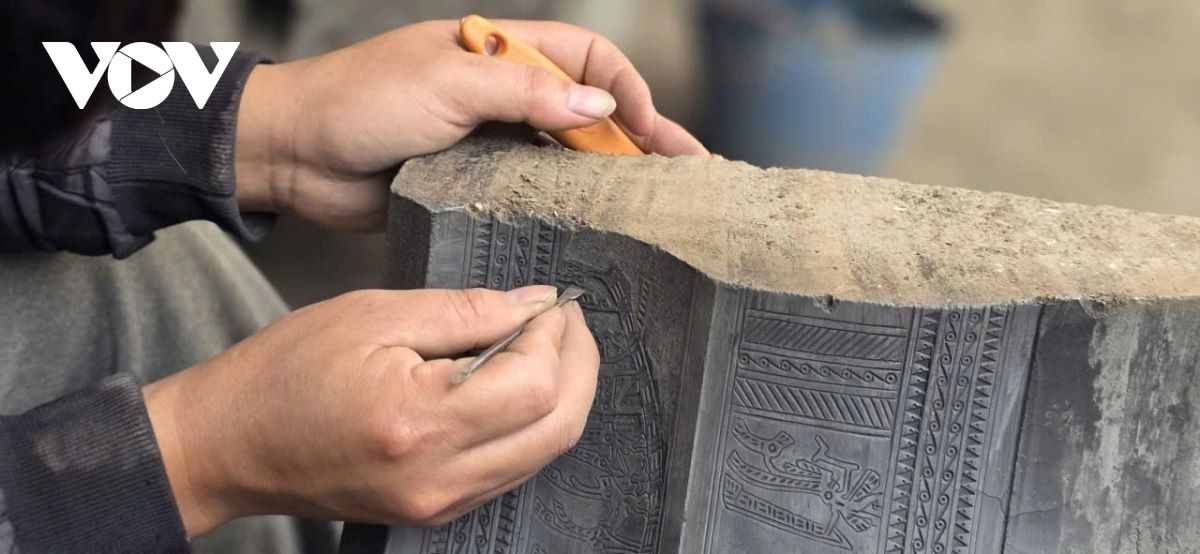
Ritual objects, bronze drums and jars gradually emerge after days of meticulous handcrafting. From the rough clay molds, timeworn forms take shape under the hands of village artisans. Every decorative line and surface is shaped with care, rooted in long-held cultural memory. The bronze glows with a warm, muted sheen, carrying the heat, sweat and pride of the craftsmen and giving each piece enduring value.
With strong growth potential, the Thieu Trung commune administration is taking strategic steps to preserve the craft and support its sustainable development. Tran Ngoc Tung, Vice Chairman of the Thieu Trung Commune People’s Committee, says the locality is moving to establish a bronze casting association to build a more cohesive community, promote products and register collective intellectual property for households. The craft currently provides jobs for more than 200 local workers with stable incomes, but sustaining it over the long term depends on ensuring that artisans can earn a decent living from their work.






Bình luận
Bình luận của bạn sẽ được xét duyệt trước khi đăng
Đang tải bình luận...